BEYOND EDTECH
TMN Universe
Why students don’t need another app
TMN® Creators working at Cruïlla Festival, barcelona. Photo by Pablo Herrera.
For years, innovation in education has been reduced to tools, platforms, and promises of efficiency. But learning doesn’t fail because of missing technology. It fails when systems forget the human side of creation.
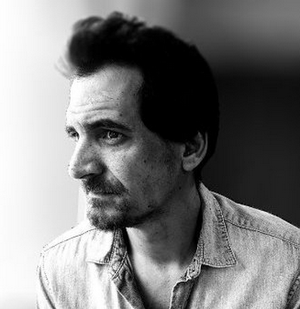
By Pablo Herrera, TMN® Founder and CEO
Every few years, education is “reinvented.” A new platform. A new app. A new promise to make learning faster, easier, more efficient.
Much of this cycle is driven by the EdTech industry—well intentioned, well funded, and often disconnected from how learning actually happens.
The term EdTech places an excessive weight on technology as a savior. A logic that already feels outdated. It assumes that progress comes primarily from tools, platforms, and features, rather than from intention, context, and human relationships.
Technology obviously matters.
But at what level?
With what purpose?
And in whose interest?
Too often, technology is used to create products and features designed to scale and generate revenue, rather than to meaningfully improve learning experiences. In an AI-driven world, the term EdTech itself begins to lose clarity—and, in my view, has done more harm than good.
And yet, the cycle continues.
In the United States, this logic is reinforced by large educational technology conferences—spaces where business leaders, researchers who rarely step into classrooms, and school administrators gather to discuss innovation through the familiar lenses of tools, systems, and data.
The language is familiar.
The announcements are loud.
And the results, more often than not, are underwhelming.
When conferences validate technology, not learning
A few years ago, I attended an EdTech conference in Philadelphia, at the same time a major music festival I cover every year was taking place in Spain. The contrast between both spaces raised an unavoidable question.
Standing there, listening to panels about platforms and dashboards, I asked myself a simple question:
What is actually changing here?
Are these systems improving how students learn?
Are they transforming classrooms in any meaningful way?
Or are they simply reproducing the same logic, packaged differently?
That was the last time I attended an event like that.
The following year, instead of a conference hall, I was at that same music festival—this time working with young creators from TMN®. We weren’t using new apps or proprietary platforms. We weren’t collecting data. We were filming concerts, writing stories, and creating media using the tools students already have in their pockets.
That’s when it became clear:
the real learning wasn’t happening in conference centers.
It was happening in the field.
And that’s when I knew: students just do not need another app.
The product trap
In many educational and entrepreneurial environments, especially in the U.S., complex human problems are quickly translated into products.
Students aren’t engaged? → Build an app.
Students don’t learn fast enough? → Add another layer, another system, another dashboard.
Students aren’t creative? → Add features.
This way of thinking isn’t necessarily malicious. It’s simply limited.
It assumes that learning problems are technical gaps, when in reality they are contextual, social, and cultural challenges.
Tools are easy to build.
Meaning is not.
No app can replace:
a sense of belonging
a real audience
mentorship rooted in practice
the feeling that what you create matters beyond a classroom
What students actually need
Young people don’t need more instructions.
They don’t need more dashboards.
They don’t need another login.
They need:
a framework to create
a network to connect and share their work
a context where learning happens by doing
guidance, not control
space to experiment, fail, and grow
They need to see how creativity, culture, and work connect in the real world.
That doesn’t happen inside closed systems.
It happens inside living ecosystems.
Three systems, three limits
TMN® didn’t emerge from theory. It emerged from lived experience across different cultural systems—each with its own strengths and blind spots.
As someone who has lived and worked for more than a decade inside these very specific ecosystems—
growing up and being educated in Latin America,
migrating to Spain to co-found a non-profit organization,
and later moving to the United States to build two companies—
I’ve had the opportunity to observe how each system supports creativity, education, and cultural production… and where each one ultimately falls short.
What follows is not a comparison from the outside, but a reading from within.
An attempt to understand why none of these systems, on their own, is enough—and why TMN® could only emerge at the intersection of all three.
Europe
Strong cultural institutions.
Public support for the arts.
But also heavy institutionalization and slow adaptation.
Creativity is often protected—but not challenged to evolve.
United States
Scale. Ambition. Infrastructure.
But also an obsession with packaging ideas into pitches, products, and simplified narratives.
Complexity is often sacrificed for speed profit and grow.
Latin America
Raw creativity. Resilience. Urgency.
But fragile structures, legal instability, and limited long-term support systems.
Talent exists.
Sustainability often doesn’t.
Each system offers something valuable.
None of them, on their own, are enough.
The missing piece: a network, not a tool
At some point, the insight became clear.
The problem wasn’t the lack of tools.
It was the lack of a shared framework where creation, learning, and culture could coexist.
What was needed wasn’t another app.
It was a network.
A place where:
young creators learn by producing real work
culture is experienced, not explained
education happens through participation
media is made from the ground up
mentorship is embedded in practice
That’s not a product.
That’s a system.
TMN as an ecosystem
TMN® is not a school.
It’s not a traditional media outlet.
It’s not an educational platform in the conventional sense.
It’s an ecosystem where:
creators pay to learn because they receive real value
sponsors participate to connect with authentic culture
institutions engage to reconnect with reality
audiences subscribe to access perspectives they won’t find elsewhere
Everything is modular.
Everything adapts to context.
Everything is designed to grow without losing its core.
No predictions, just direction
We don’t know exactly what TMN® will look like in ten years.
And that’s intentional.
What we do know is this:
it won’t be another tool
it won’t reduce creativity to features
it won’t treat young people as users
It will remain a space where learning, culture, and creation stay connected.
Sometimes the most radical thing you can do is refuse to build another app— and instead build a framework for people.
— Pablo Herrera
Founder, Teens Media Network®
Read more blog post from Pablo Herrera 👉🏽 here.
Ready to start shooting festivals like a pro?
TMN® Members can start the course today 🚀
More tools.
More opportunities.
More real learning.
Welcome to TMN® Learning.
Share this post: