DILES QUE NO ME MATEN
An evolving process
Diles que no me maten performing at SXSW 2026. Photo: Pablo Herrera / TMN®.
We met Diles que no me maten in Austin during SXSW for a conversation that moves through their origins, creative process, and the evolution of their sound. The band, based in Mexico City, reflects on how the project started, how it has taken shape over time, and how they understand their work today.
AUSTIN | Interview and photography by Pablo Herrera
The band was formed in Mexico City with the intention of four friends creating a musical project influenced by psychedelic sounds, with the aim of making something that would not conform to the established conventions of independent music. The members already knew each other, but it was through the decision to make music together that the project began to take form.
From my personal experience, Diles que no me maten has been one of the most original bands I experienced at SXSW this year so far. This is not a band that fits into any particular scene, nor one that presents itself as a defined musical structure. They are simply that: a group of musicians who have come together to create something based on the influences they are drawn to.
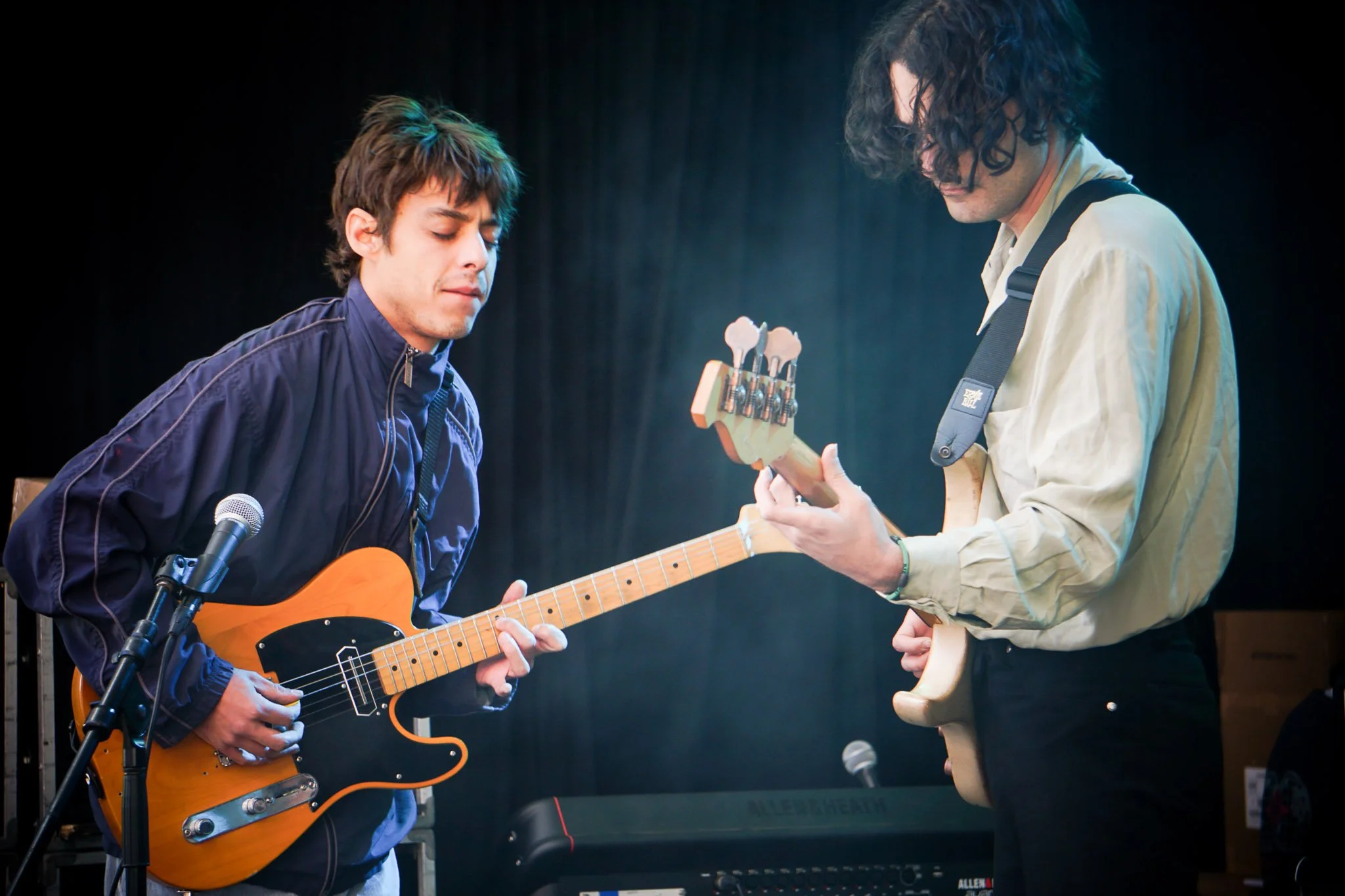

Poetry, and more importantly spoken words, is what makes the band particularly distinctive. The contrast at SXSW compared to the bands I had been experiencing was significant. Diles que no me maten does not seem interested in being defined under a specific genre. Some call them experimental, others psychedelic, others “sonically distinctive,” but what the band ultimately reveals is a constant drive to innovate and challenge the conventions of the music industry.
In my experience, it felt like a breath of fresh air among so many indie, punk, soul, blues, electronic, pop, rap, rock bands, etc. It was like finding a moment of calm within the turbulent and overwhelming sea of SXSW.
Below are some statements shared with TMN by Andrés Lupone and Raúl Ponce, the band’s bassist and drummer.
“We met before belonging to any scene. We were aware of each other’s existence, and for some reason it made sense to start a band. That’s when we became friends, which I think is a really good thing.”
From the beginning, the band’s development has been connected to an ever-changing environment. The Mexico City scene, as they explain, cannot be defined as a single entity but rather as multiple independent spaces that coexist and evolve.
The band began as a project started by Raúl and his brother, later joined by other close musicians. Andrés and Jerónimo eventually joined and helped consolidate the initial lineup.
During this process, the band was looking for someone to sing, but not necessarily a traditional vocalist. Through a friend’s recommendation, they met Jonás at a jam session, and after playing together, his presence naturally became part of the project.
“Sebastián Rojas suggested we invite Jonás to play with us… we played together and it worked really well.”
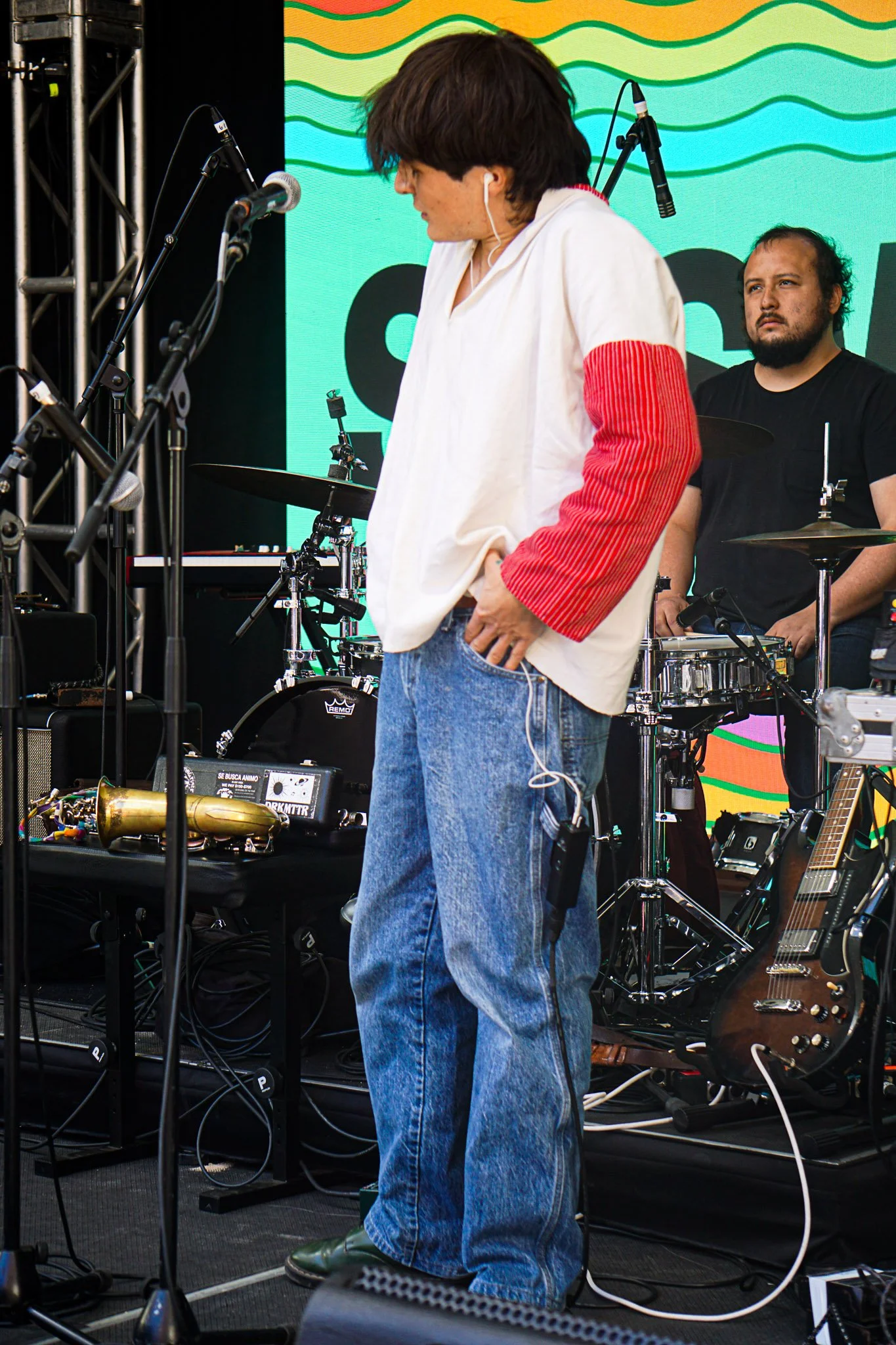
Jonás Derbez. Diles que no me maten. Photo: Pablo Herrera / TMN®.
At the same time, the band approaches music as an ongoing learning process. Beyond formal education, studying becomes a constant practice that is part of both individual and collective development.
This perspective also extends to the internal dynamics of the group. Communication between musicians and the ability to work with different levels and experiences become key elements in sustaining the project over time.
Composition within the band is understood as a collective process. While ideas may originate individually, the final result is built collaboratively, allowing those ideas to evolve and transform.
“In a collective creative process, you have to be open to others transforming your idea.”

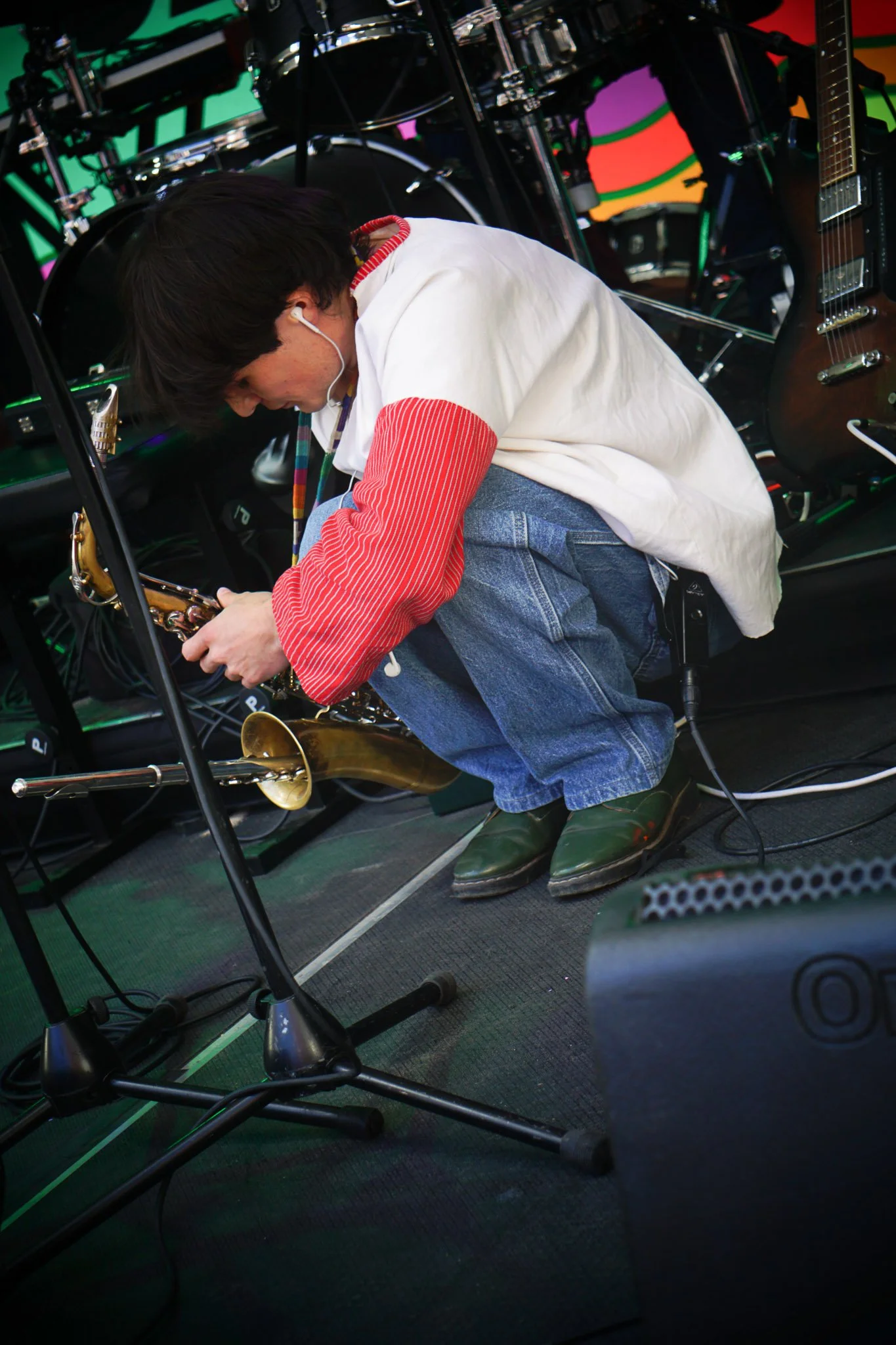
In terms of their discography, the band describes an evolution that reflects different stages of the project. Their first album, Edificio (2020), is closer to their live sound, while in La vida de alguien más (2021) the band realized they could use the recording studio as an additional compositional tool.
Their latest album, Obrigaggi (2023), is the result of this ongoing maturation process, through which the band has defined its identity in a relatively short period of time, yet with a level of musical language that feels both intense and fully developed.
“Hugo Quesada, the producer of our second album, is able to see within a mass of material what stands out, then remove everything else and even make it uncomfortable… and I really like that.”
Gerardo Ponce. Diles que no me maten. Photo: Pablo Herrera / TMN®.
The conversation ultimately returns to Mexico, not only as a place of origin but as a broader context undergoing transformation and gaining influence in music. The accessibility of production tools and the diversity of proposals are reshaping the current landscape, making Mexico City one of the most active points within the Latin American independent scene.
Diles que no me maten sits within this context as part of a movement that is taking shape and defining its direction.
“Right now in Mexico City, there are many people trying to do different things, using a more local language… not simply trying to imitate the U.S., and that’s a very good sign.”
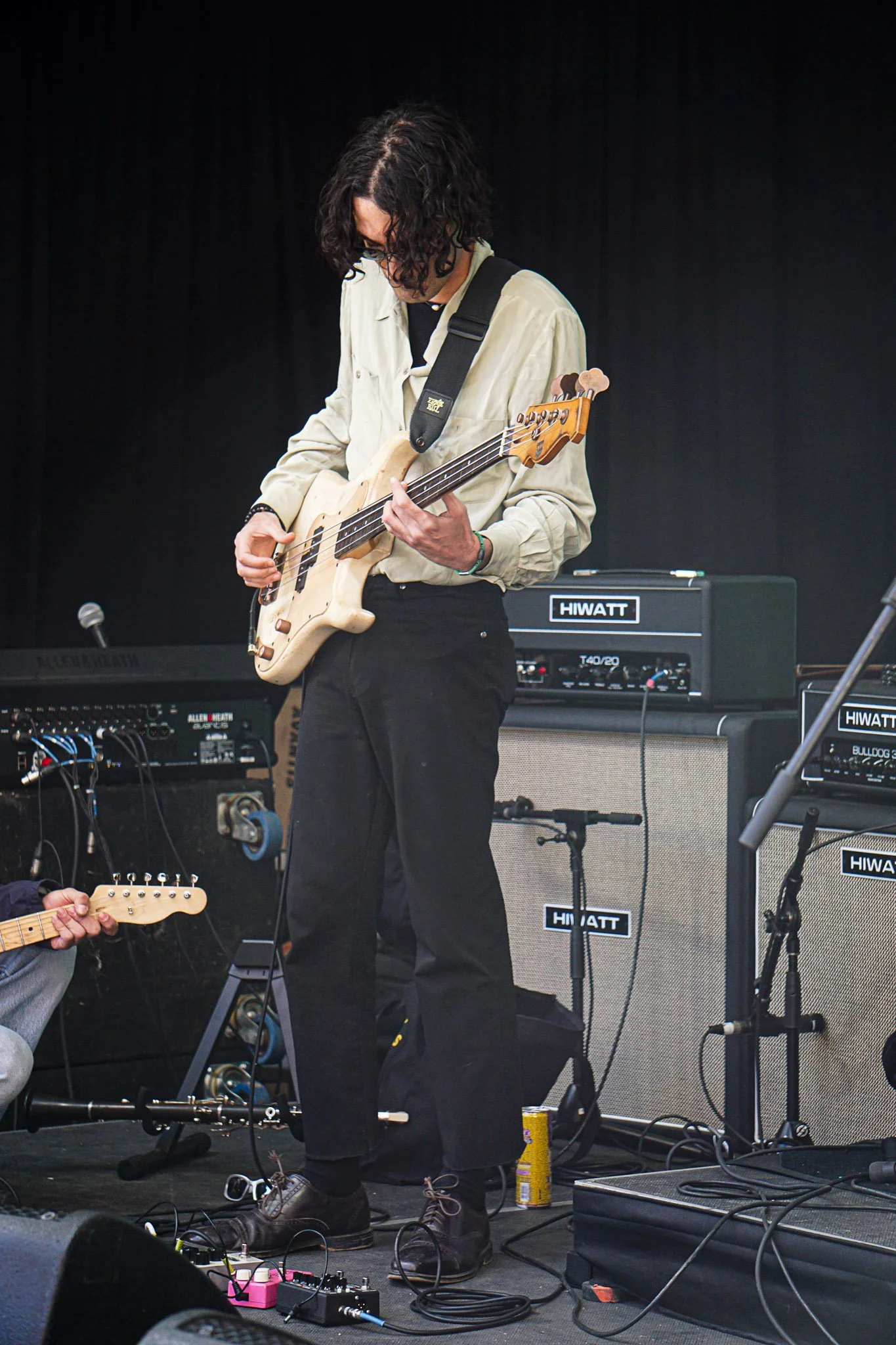
Andrés Lupone, Jerónimo García and Raúl Ponce. Diles que no me maten. Photo: Pablo Herrera / TMN®.
Our conversation ends with Raúl and Andrés sharing reflections based on their experience. Both emphasize the importance of finding a personal path rather than following existing formulas. They also highlight the need to make mistakes, to understand them as part of the process, and to approach artistic development as something continuous.
“It’s a perpetual exercise… as an artist you are always studying and reflecting, even when it becomes difficult and painful.”
The full interview with Diles que no me maten is available below:
Diles que no me maten, exclusive interview with Andrés Lupone and Raúl Ponce. Recorded in Austin, TX. During SXSW 2026. Interview by Pablo Herrera / TMN®.
Diles que no me maten, Current Lineup:
Jonás Derbez - vocals, flute, saxophone, guitar
Jerónimo García - guitar, clarinet, saxophone, synthesizer
Gerardo Ponce - guitar, synthesizer, trumpet, bass
Andrés Lupone - bass, synthesizer, mellotron, acoustic guitar, violin
Raúl Ponce - synthesizer, percussion, drums
Record labels: Come Algo / Mexican Rarities
Interview recorded in Austin, TX during SXSW 2026.