NO MERCY
North American Premiere at DOC NYC 2025
HARSHNESS, HONESTY, AND THE FEMALE/NON-BINARY GAZE IN THE WORK OF ISA WILLINGER

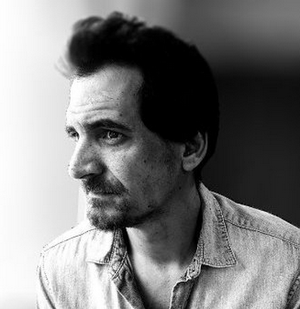
The full conversation is now available on YouTube. Photo of Isa Willinger by Andreas Müller.
The North American premiere of No Mercy, a film interrogating power, violence, and representation by German filmmaker Isa Willinger, is taking place this week at DOC NYC. We spoke with Isa for our TMN Talks podcast, where she reflected on how women and non-binary directors often approach cinema “from honesty rather than distance.” The conversation opened into questions of gaze, experience, and what it means to look — not just watch.
NEW YORK CITY. Written by Pablo Herrera
There is a particular kind of silence that surrounds documentary screenings at DOC NYC. A silence that isn’t empty — it’s charged. The kind of silence that happens when a film isn’t just offering information, but asking something of us. No Mercy, the new film by director Isa Willinger, creates exactly that space. The film begins from a question inherited from Ukrainian filmmaker Kira Muratova: “Do women make harsher films?” Not a slogan, not a thesis — a provocation. And the film doesn’t try to answer this question by proving anything. Instead, it lets the question resonate across voices, histories, bodies, and the unresolved politics of how we see.
Willinger has been working in film for over a decade, and her earlier documentary Hi, A.I. (2019) now feels strangely prophetic, arriving years before artificial intelligence became a mainstream cultural topic. But No Mercy is not the follow-up people might expect from a filmmaker who “anticipated” a technological shift. This film doesn’t diagnose the future — it asks who gets to narrate it. It gathers women and non-binary filmmakers from different generations and geographies, and places them in a shared conversation, without forcing that conversation into agreement. Their differences stay alive. Their contradictions breathe. And yet there is something common that moves beneath them.

Still frame from No Mercy. Directed by Isa Willinger. Photo: Doro Götz. ©Tondowski Films / Flair Film.
When we spoke, Isa didn’t describe “harshness” in terms of violence. She resisted that simplification immediately. What interested her was honesty — the removal of the protective layer that usually covers representation. In her words: “They’re talking about their lives in a very honest and blunt way. And that makes them appear harsh.” The word harsh then becomes something else entirely — not brutality, but truth without performance. A refusal to soften the difficult parts of being alive.
This resonates across cultures more than one might expect. I asked her about the shared thread between a filmmaker who grew up in the Soviet Union and one raised within the relative freedoms of the U.S. The context is different, the histories are different, the forms of oppression are different — but the structural imbalance is still there. Isa said something that stayed with me: “Patriarchy is universal in a way.” Not as a slogan, but as an observation. Even as some gains have been made, violence against women is rising again in many places. Progress and reversal, simultaneously.
FEELING INSPIRED?
Become a TMN member and join the community powering the next generation of creators.
Get exclusive content, support young and independent journalism, learn alongside emerging talent, and be part of a movement that believes in the power of ideas.
TMN exists thanks to people like you!
As someone who has worked with young people for more than two decades, I felt this point deeply. There is a constant fear projected onto youth — that they don’t understand, that media is overwhelming them, that they can no longer “read” the world. But I see something else. I see young people questioning images instinctively. They remix, they break, they refuse to accept representations as fixed. The problem is not youth. The problem is that adults often cannot imagine the world changing.
This is where the conversation with Isa moved into what feels like the heart of the film: learning to look. Not learning what to think, not being told what a film “means”, but developing the capacity to stay with ambiguity long enough to feel it. Isa put it beautifully: “I don’t want to teach people what to think. I want them to have the experience of thinking.” That is media literacy at its deepest level — not a set of rules, but a practice of attention.
“I don’t want to teach people what to think. I want them to have the experience of thinking.”

Still frame from the film Sira. Directed by Apolline Traoré. Photo: Nicolas Berteyac. ©Araucania Films.
At TMN®, we work with that same urgency. Young people do not need more instruction, more lectures, or more adults telling them how to feel about images. They need space, tools, and trust. They need mentors, not teachers — people who stand beside them as they figure out how to see. And films like No Mercy offer something extremely rare: time. Time to sit with complexity. Time to feel without resolution. Time to look without rushing toward explanation.
No Mercy is not a film that closes anything. It opens. It invites us into a conversation that does not end when the screen goes dark. And perhaps that is the point. The work now is not just to watch differently — but to stay in the question. To remain awake. To look again.
The full conversation is now available on YouTube.
Share this post: