D’A (PART 3)
FILM FESTIVAL
D’A (part 3). The End and the Future
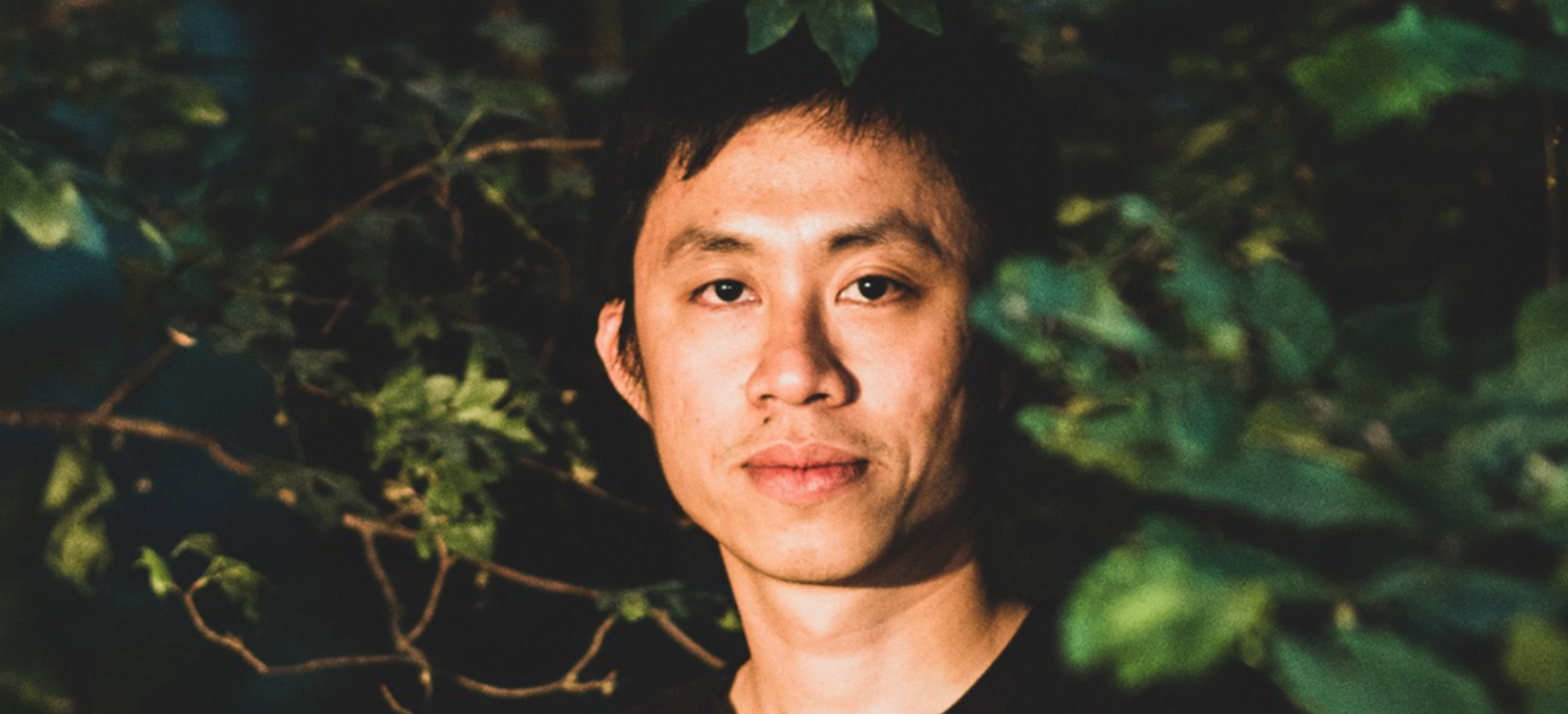
Minh Quy Truong (Vietnam, 1990), was a resident at the Asian Film Academy of the Busan International Film Festival and at Berlinale Talents. At this year’s edition of D’A, he presented his latest work: Viet and Nam.
There’s always something left unsaid when trying to condense the experience of a festival like D’A. Films that reveal themselves in silence, images that echo days later, and emotions that still have no name. This final round of screenings felt like an unexpected epilogue — four titles that, each in their own way, once again proved cinema’s power to move us, unsettle us, or simply remind us that we’re still here: attentive, alive.
From the documentary dance of Youth (Homecoming) to the metaphysical humor of In Our Day, from the dark lyricism of Viet and Nam to the existential unease of The Shrouds, these films closed my time at D’A with an intensity I’m still processing. Four works that not only accompanied me as a viewer, but also pushed me to reflect on what I seek — and what I find — when I take my seat in the theater. Here are the final flashes of a week of cinema that, as always, leaves its mark.
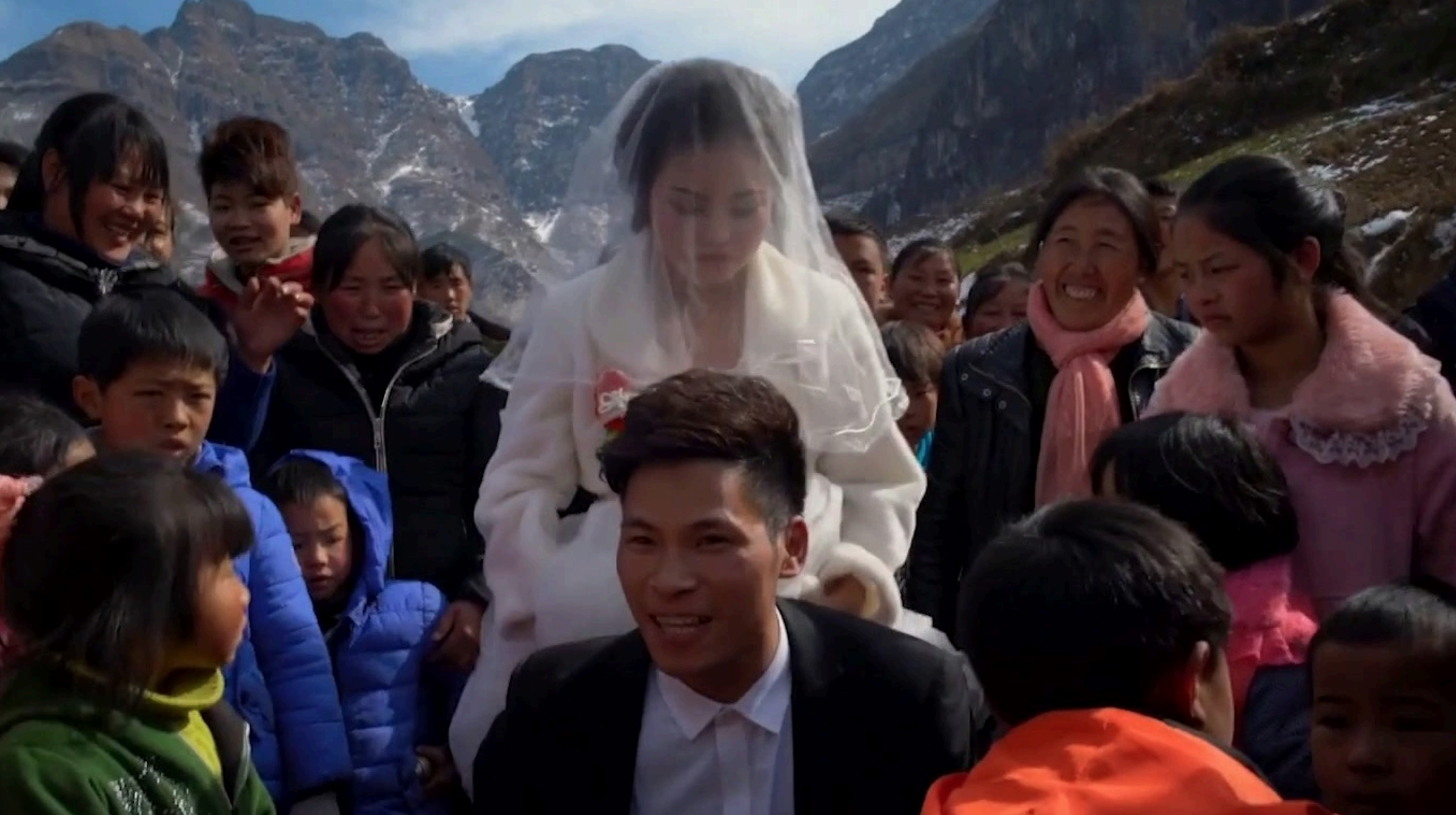
Youth (Homecoming), Wang Bing. Taiwan, France, 2024. D'A Barcelona Film Festival, 2025.
Youth (Homecoming)
Youth (Homecoming), by Wang Bing, the third part of his trilogy, is a two-and-a-half-hour documentary that captures the return home of textile factory workers from Zhili. Brief, intense returns that mark the beginning of holidays as eagerly awaited as they are fleeting. Wang Bing’s handheld camera has long been a defining presence in documentary cinema, but in Youth (Homecoming), it’s the first time I’ve seen it dance. Here, his camera no longer limits itself to observing from a distance or recording in an aseptic manner: there’s an almost obsessive drive to become part of the protagonists’ holiday celebrations, to be carried away by their songs, their weddings, their conversations.
And it is precisely that surrender that creates such a powerful sense of empathy. Wang Bing is a filmmaker with a Lumière-like spirit, and I still find it hard to believe that his cinema exists. His portrayal of society is as thorough as it is precise, but what continues to disarm me is the emotional force of his images. His cinema goes beyond words — it is image and sound in their purest form. And that is where the emotion emerges: in his way of filming the invisible, of making the unheard feel palpable. Within that gesture, an entire world is contained.
“Wang Bing is a filmmaker with a Lumière-like spirit, and I still find it hard to believe that his cinema exists. His portrayal of society is as thorough as it is precise, but what continues to disarm me is the emotional power of his images.”
FEELING INSPIRED?
Become a TMN member and join the community powering the next generation of creators.
Get exclusive content, support young and independent journalism, learn alongside emerging talent, and be part of a movement that believes in the power of ideas.
TMN exists thanks to people like you!
🎉 Use code TMN2025 to get $10 off your membership — join the movement today!
A Traveler's Needs
The next day, after the emotional shock of reconnecting with Wang Bing’s cinema at the festival, I had the opportunity to watch A Traveler's Needs, by Hong Sang-Soo. In Our Day follows Isabelle Huppert as Iris, a tourist who arrives in Seoul, with no one really knowing where she’s come from. Hong Sang-Soo offers us here a subtle comedy, woven with impossible translations and transformative poems. But I feel that dedicating only one paragraph to it would be unfair to someone who, in my opinion, is the best director of the 21st century. So I’ll limit myself to saying this: if the world is in constant transformation, his cinema is too. And it is precisely for this reason that no one, like Hong Sang-Soo, understands life and its changes with such clarity, lightness, and truth. Go see it as soon as possible, it premieres on April 16th — there aren’t enough words (the film says it itself).

A Traveler's Needs, Hong Sang-Soo. South Korea, 2024. D'A Barcelona Film Festival, 2025.
“Hong Sang-Soo offers us here a subtle comedy, woven with impossible translations and transformative poems. But I feel that dedicating just one paragraph to it would be unfair to someone who, in my opinion, is the best director of the 21st century. So I’ll limit myself to saying this: if the world is in constant transformation, his cinema is too.”
Viet and Nam
After this screening, I had the opportunity to watch Viet and Nam, by Truong Minh Quy. A Vietnamese debut with a revealing vision, leaving so much to think about and discuss. The film tells the story of two lovers working in a mine in early 21st-century Vietnam. A deeply moving tale with stunning cinematography, where coal, dark and dense, has never shone with such beauty and mystery. The atmosphere it builds is truly special: it weaves an intimate bond between the viewer, the characters, and the space — something I honestly only find in contemporary Asian cinema. Viet and Nam is a full-fledged revelation. Something is happening in Vietnam and in its cinema. And what is being born there deserves our full attention.
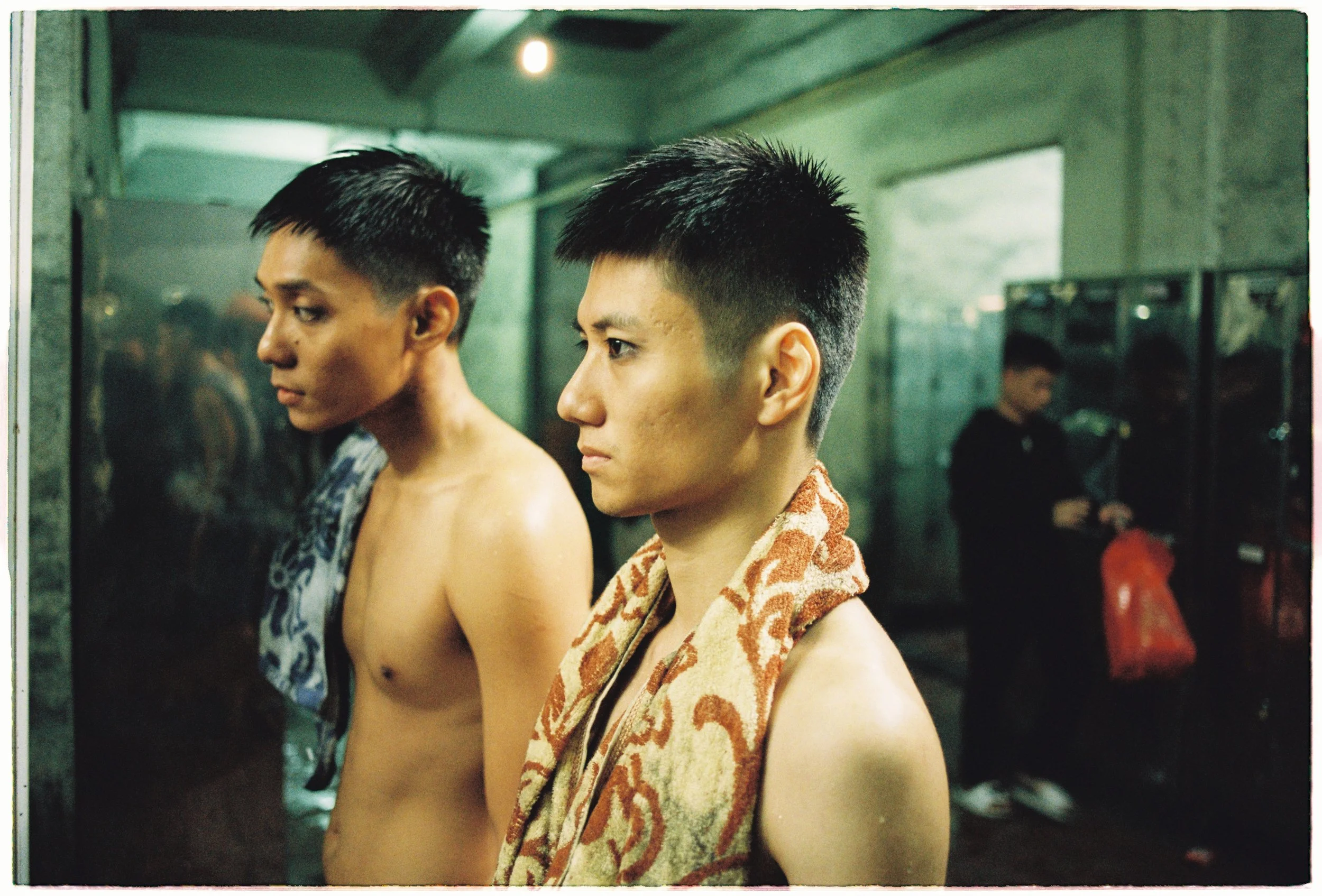
Viet and Nam, by Truong Minh Quy. Singapore, France, Italy, Germany, 2024. D'A Barcelona Film Festival, 2025.
“The film tells the story of two lovers working in a mine in early 21st-century Vietnam. A deeply moving tale with stunning cinematography, where coal, dark and dense, has never shone with such beauty and mystery.”
The Shrouds
Finally, my journey through the D’A ended with The Shrouds, by David Cronenberg. A screening that, personally, was as controversial as it was stimulating. Cronenberg has never been a director that particularly excites me, but I must admit that this film proves that his presence in cinema remains as disturbing as it is inevitable. I entered the theater with very low expectations, but it only took seeing Vincent Cassel playing, almost literally, a Cronenberg alter ego, for me to be floored. The first part of the film is uncomfortable in the best possible way, creating a dense, uneasy atmosphere, but also beautifully unsettling.
The second part left me more conflicted. The plot drifts into the absurd, the performances approach the unbelievable, and I couldn’t quite understand the reason behind such an extreme shift. Still, I feel that this discomfort was necessary, that the imbalance is part of the whole, even if I can’t fully decipher it. Overall, The Shrouds is a strange, bewildering cinematic experience, but deeply stimulating. It surprised me, shook me, and left me, as a fitting festival finale, with a discomfort that still hasn’t dissipated.
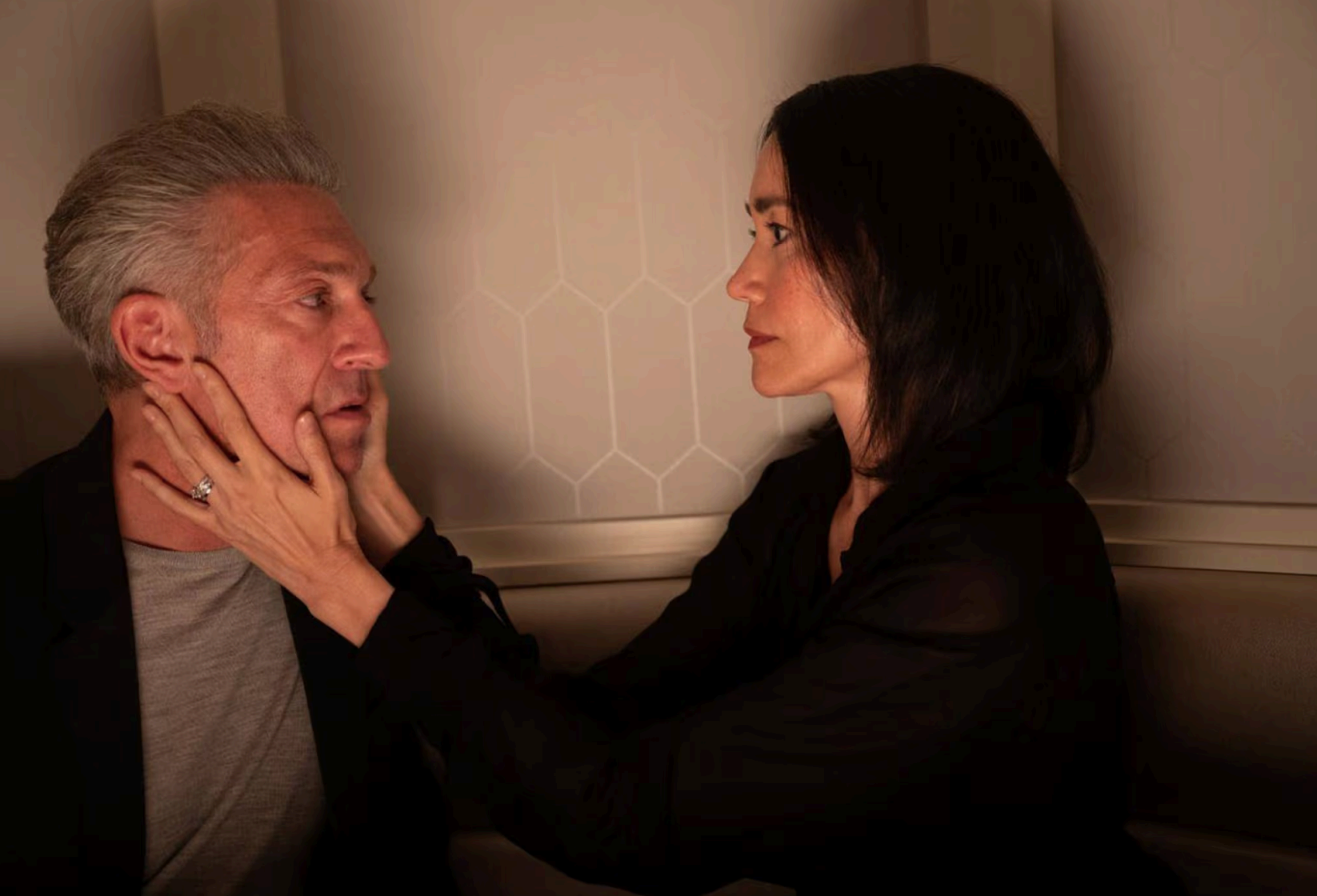
The Shrouds. David Cronenberg. Canada, France, 2024. D'A Barcelona Film Festival, 2025.
“Cronenberg has never been a director that particularly excites me, but I must admit that this film proves his presence in cinema remains as disturbing as it is inevitable.”
A Week to Remember
This has been my fourth year attending the D’A as a die-hard spectator, and it never, ever disappoints. I sincerely feel that I grow alongside this festival, and it’s clear that every year I spend in its rooms, I become a slightly different person, a bit more aware, a bit more alive. This year, I also had the opportunity to cover it with TMN, in an unforgettable and deeply analytical experience.
Covering the D’A with TMN has undoubtedly been one of the most beautiful and meaningful experiences I’ve had this year. In a world where opportunities for young people are scarce, for a platform like this to have believed in me—a 19-year-old eager to watch, write, and share cinema—is something I will never forget. It has been a week of a lot of work, yes, but also one of constant discovery, of feeling heard and part of a space where the young perspective is not only welcomed but necessary. Beyond the coverage of the films, this experience has made me grow as a spectator and as a person. TMN understands that cinema is not just consumed: it’s thought, written, and lived. And being part of that, being able to engage with all of you from this corner of screens and shared passion, has been truly special. Thank you for reading, for being there, and for being part of this small great miracle that is talking about cinema as if our lives depended on it.
“Covering the D’A with TMN has undoubtedly been one of the most beautiful and meaningful experiences I’ve had this year. In a world where opportunities for young people are scarce, for a platform like this to have believed in me—a 19-year-old eager to watch, write, and share cinema—is something I will never forget.”
Thank you, D’A, for so many moments in which cinema truly breathes in the streets of Barcelona. For that unique moment when, for a few days, the mental and emotional chaos of all of us who sit in the seats of your theaters comes to a halt. Thank you for the constant stimulation, for the thought and emotion, but above all, and I say this with all my heart, thank you for that weekly peace that only good cinema can give us.
Share this post: