IT WAS JUST AN ACCIDENT
FILM
When Comfort Replaces Risk in Cinema
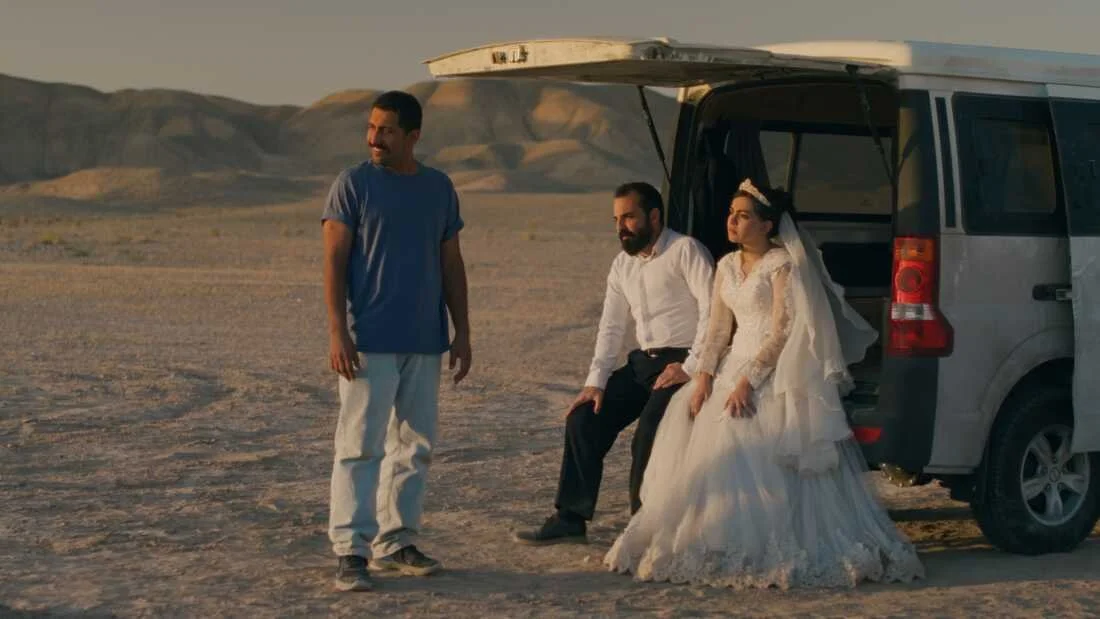
It Was Just an Accident. Jafar Panahi 2025.
A film can carry an urgent political message and still fail to evolve as cinema. Jafar Panahi’s latest work raises an uncomfortable but necessary question: what happens when resistance becomes a formula?
New York City, By Pablo Herrera.
The year started at the movie theater. And while cinema often promises discovery, sometimes it delivers something else: just confirmation.
I went to see It Was Just an Accident, Jafar Panahi’s latest film, awarded the Palme d’Or at Cannes in 2025. I already knew this text would be uncomfortable to write — not because of what the film says politically, but because of what it does formally. So let’s be clear from the beginning: this is not a political critique.
What happens in Iran is not up for debate. The repression, the authoritarian structure, the violence of the system — all of that is real, documented, and unacceptable. I know this not abstractly, but through lived experience and close conversations. Questioning that context is unnecessary.
This text is about cinema.
And more specifically, about creative stagnation.
From minute one, I knew exactly how the film would unfold. Not because I had read spoilers, and not because I was particularly perceptive — but because Panahi’s cinematic language has become entirely predictable. I recognized every resource before it appeared. I anticipated the narrative turns, the moral framing, the emotional conclusions. Scene after scene confirmed what was already expected.
That is not tension.
That is repetition.
There is a crucial distinction between coherence and stagnation. An artist can maintain an ethical position, a political commitment, even a recognizable voice — and still evolve formally. But when the language stops changing, when risk disappears, when surprise is no longer possible, the work ceases to function as a question and becomes a confirmation of what we already know.
And that is where It Was Just an Accident fails.
The film relies once again on the familiar grammar of a certain canonized Iranian cinema: minimalism as virtue, austerity as moral guarantee, symbolic gestures standing in for complexity. Early on, the figure of oppression is established through a familiar visual code. We’ve seen it before. We know what it represents. From there, the film gradually collapses into moral didacticism.
Instead of trusting the audience, it explains itself.
The message becomes simplified to the point of reduction: the system makes ordinary people turn against each other while power operates safely from above. That idea is not wrong — but it is presented with such narrative insistence that it loses its force. What could have been unsettling becomes instructive. What could have been dangerous becomes safe.
Ironically, the story itself is anything but modest. The narrative choices — bordering at times on implausibility — lean more toward conventional dramatic construction than toward the social realism the film claims. The result is a strange hybrid: raw poetic imagery mixed with predictable storytelling mechanics. The two don’t fully coexist.
As the film progresses, it begins to feel less like cinema and more like staged theater. Characters speak in lines that aim for moral brilliance — and some of them are well written — but they arrive exactly when expected, say exactly what is anticipated, and lead precisely where the film has already signaled it will go.
Nothing resists the viewer.
When a film like this is awarded at Cannes, the decision is understandable in political terms. Festivals are not neutral spaces; they operate within moral and geopolitical frameworks. But from a strictly cinematic perspective, the lack of formal risk is impossible to ignore.
Resistance does not exempt an artist from evolution.
Iranian cinema — and Panahi’s cinema in particular — cannot remain indefinitely protected by its political context. At some point, the language itself must move forward. Continuing to rely on the same tools, the same rhythms, the same symbolic shortcuts, is not an act of defiance. It is comfort.
And comfort is the enemy of cinema. Not only because it dulls form, but because it is useless for producing real change.
Comfort does the opposite of what this film seems to intend: it allows things to continue exactly as they are.
For Panahi, remaining in this zone of narrative, aesthetic, and political safety may ultimately lead not to resistance, but to stagnation.
This critique is not a rejection of Panahi’s courage, nor of the importance of telling stories under oppressive regimes. It is a call for something more demanding: the courage to reinvent one’s own language.
Panahi undoubtedly has the intelligence and creativity to do so.
The question is no longer whether he can.
It’s whether he’s willing to leave the territory where everyone already agrees with him.
Read more blog post from Pablo Herrera 👉🏽 here.
Ready to start shooting festivals like a pro?
TMN® Music Photography Course is open for enrollment now 🚀
More tools.
More opportunities.
More real learning.
Welcome to TMN® Learning.
Share this post: