D’A (PART 1)
FILM FESTIVAL
D’A (PART 1). EMPIRES AND TOXICITIES

The Georgian director Dea Kulumbegashvili. Festival D’A 2025.
The 15th edition of the D’A Festival in Barcelona has kicked off, and although it has been underway for several days, it feels like this is only the beginning. This weekend, the festival welcomed Béla Tarr, and cinema has been flowing through the streets of the city—from the Aribau Cinemas to the CCCB, passing through Zumzeig and returning to Sala Montjuïc. There is a palpable love for cinema in the air, a sensation that, while seemingly eternal, becomes tangible and fascinating with the arrival of D’A. And after fifteen years, everything suggests that the best is yet to come.
My journey through this edition of the festival began with L’empire, by Bruno Dumont. Described as a "wacky Star Wars à la française," it has turned out to be one of the most striking surprises of the year. The film presents a metaphor about good and evil in the form of a science fiction tale: a baby named Freddy embodies the new face of the Antichrist and must be stopped by various extraterrestrial beings who take on human form. These beings discover the wonders of human experience—love, sex, connection—and what initially seems like an outrageous and provocative story ultimately transforms into an unexpected tenderness within the director’s filmography.
Through Bach’s melancholic melodies, Buster Keaton-style cynical humor, and absurd extraterrestrial elements, L’empire becomes a kind of prehistory of humanity—a fable about what it truly means to be human and how we confront the battle between good and evil. One of the most original offerings from both the director and the festival.
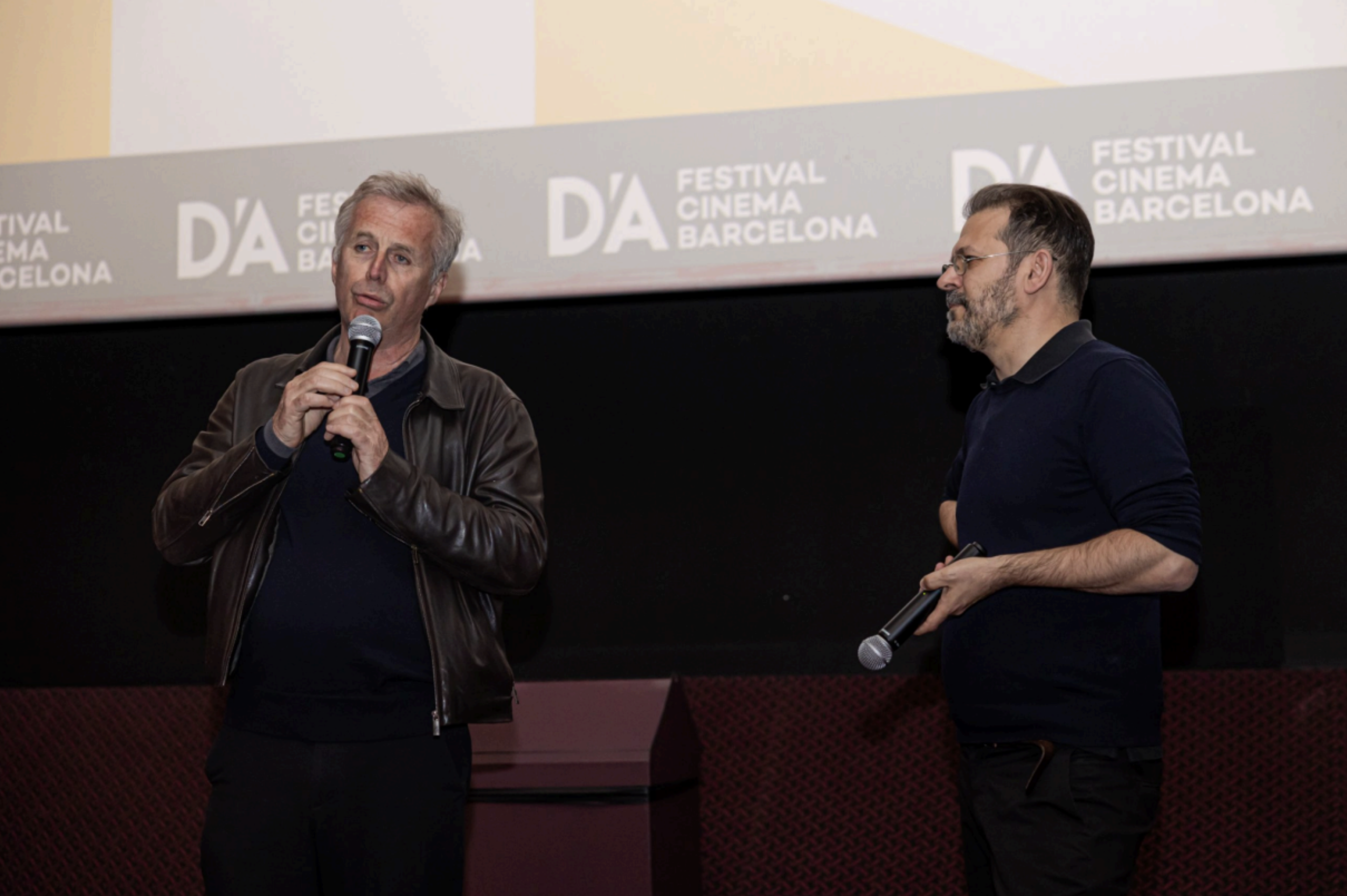
Bruno Dumont, at the L’empire discussion. Photograph: Festival D'A 2025.
Additionally, Bruno Dumont himself was present to introduce the film and take part in a post-screening discussion. During the event, I had the opportunity to ask him a question. I inquired about the use of music in L’empire, as I was struck by the prominent presence of Bach’s classical pieces in such an unusual science fiction film.
“Music elevates emotions and creates a third image in the viewer—a mental image born from the fusion of the visual and the auditory.”
His response, in French, was extensive and enlightening. He explained that, for him, the emotion of an image is inevitably tied to the emotion of music. Music, he said, elevates feelings and creates a third image in the viewer—a mental image born from the fusion of the visual and the auditory.
For Dumont, cinema is music: every decision must be musical, and without music, the image loses part of its meaning. According to him, this film is a space opera inspired by the 1950s, a genre where music was essential to the construction of the image. So, in a contemporary cinema full of anomalies like European science fiction, why not return to those traditions that knew how to harmonize emotion, image, and sound?

April. Dea Kulumbegashvili. 2024, Georgia, Italy, France. D'A Festival 2025.
Later, I had the opportunity to see Abril, by the Georgian director Dea Kulumbegashvili. And honestly, I highly doubt that any other screening at D'A could surpass the power of this film. The movie delves into the life of a gynecologist accused of performing abortions, and it does so with a boldness rarely seen in contemporary cinema. Often, films struggle to represent the tension between the public and private spheres, but Kulumbegashvili does not hesitate to depict childbirth in all its rawness or to treat abortion as what it is: a human, intimate, and necessary act in European societies.
With long, contemplative shots and a gaze that merges the human body with nature, Abril builds a psychological narrative about sexuality, female desire, and the need to reconcile with the world around us. It is, without a doubt, a film that deserves to be seen, thought about, and analyzed in depth. The rain, the clouds, the passage of time, and the natural landscapes are not just a backdrop: they are emotional matter, elements that envelop the story with a constant unease, as if something enormous were about to explode at any moment... and yet, in the end, what remains is an immense emptiness, almost unbearable. I will only add that there is a scene of an off-screen abortion that is deeply disturbing. Since The Zone of Interest, I hadn't seen such a necessary, dry, and brutally honest off-screen moment.
“It is, without a doubt, a film that deserves to be seen, thought about, and analyzed carefully. The rain, the clouds, the passage of time, and the natural landscapes are not just a backdrop: they are emotional matter, elements that envelop the narrative with a constant unease, as if something enormous were about to explode at any moment...”
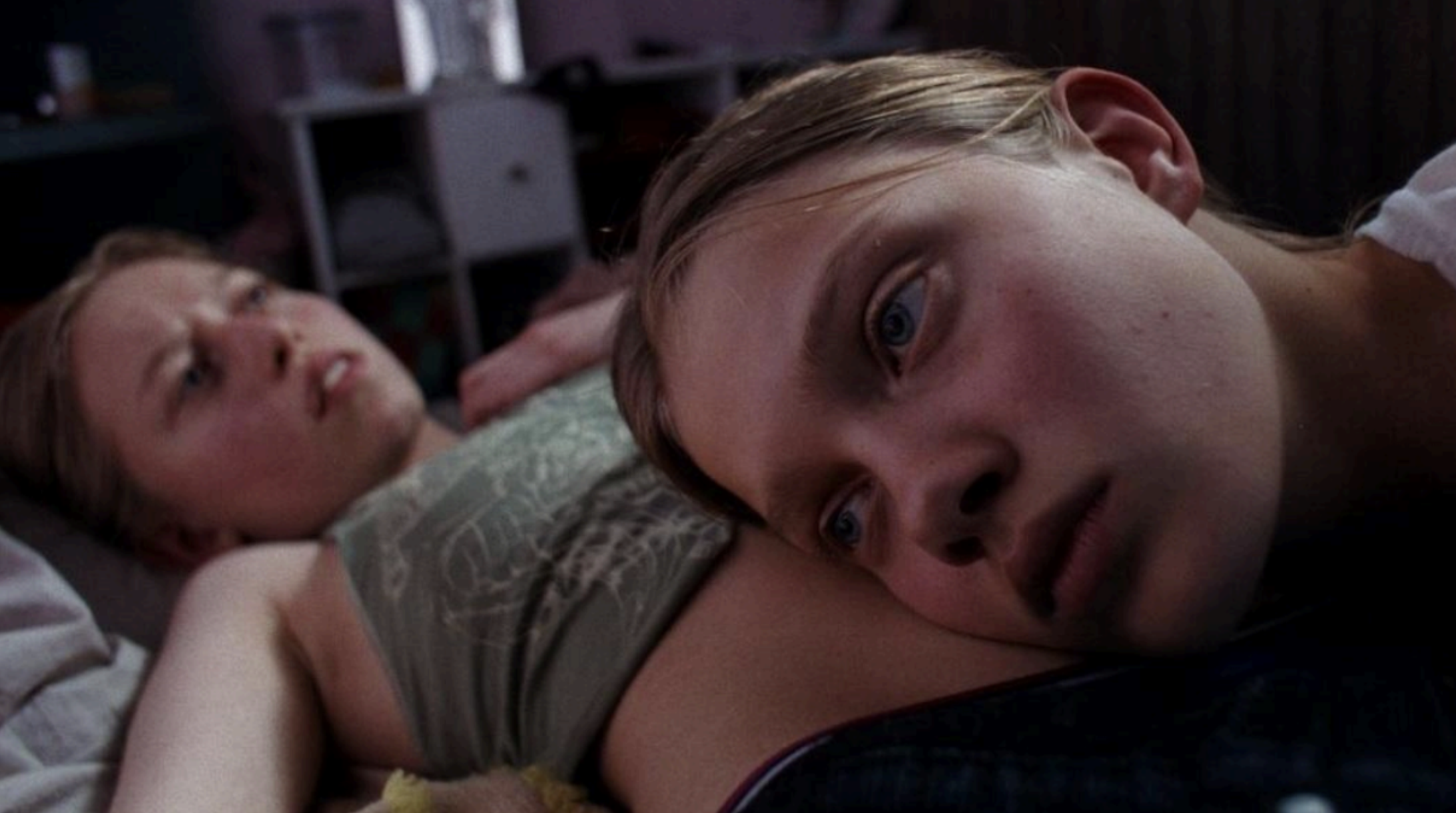
Toxic. Saulė Bliuvaitė. 2024, Lithuania. D'A Festival 2025.
After so many crazy and incredibly bold bets, it was time for Toxic by Saulė Bliuvaitė. This Lithuanian film, winner of the Golden Leopard at Locarno, depicts the world of modeling in a corrupted society, set in a remote village in the country. Daring and biting, what struck me the most was its decision to tackle such a raw story through girls between the ages of 13 and 14. Preteens who smoke, engage in ambiguously consensual sexual relations, and deal with behaviors that verge on eating disorders.
It portrays young girls who, in the world of modeling, are prematurely dragged into the adult universe, against their own nature. For much of the film, scenes unfold in forests and natural landscapes, establishing a powerful dichotomy between the organic and the social. I was also fascinated by the sparse presence of the modeling agency space. This device reinforces the message that the problem is not solely in the agencies but extends to a much deeper social issue. Toxic presents itself as an incredibly harsh work, but at the same time, it sketches glimpses of hope for a new beginning beyond the misery. Still, at times, the film becomes excessively aesthetic, which could hinder its observational and critical discourse.
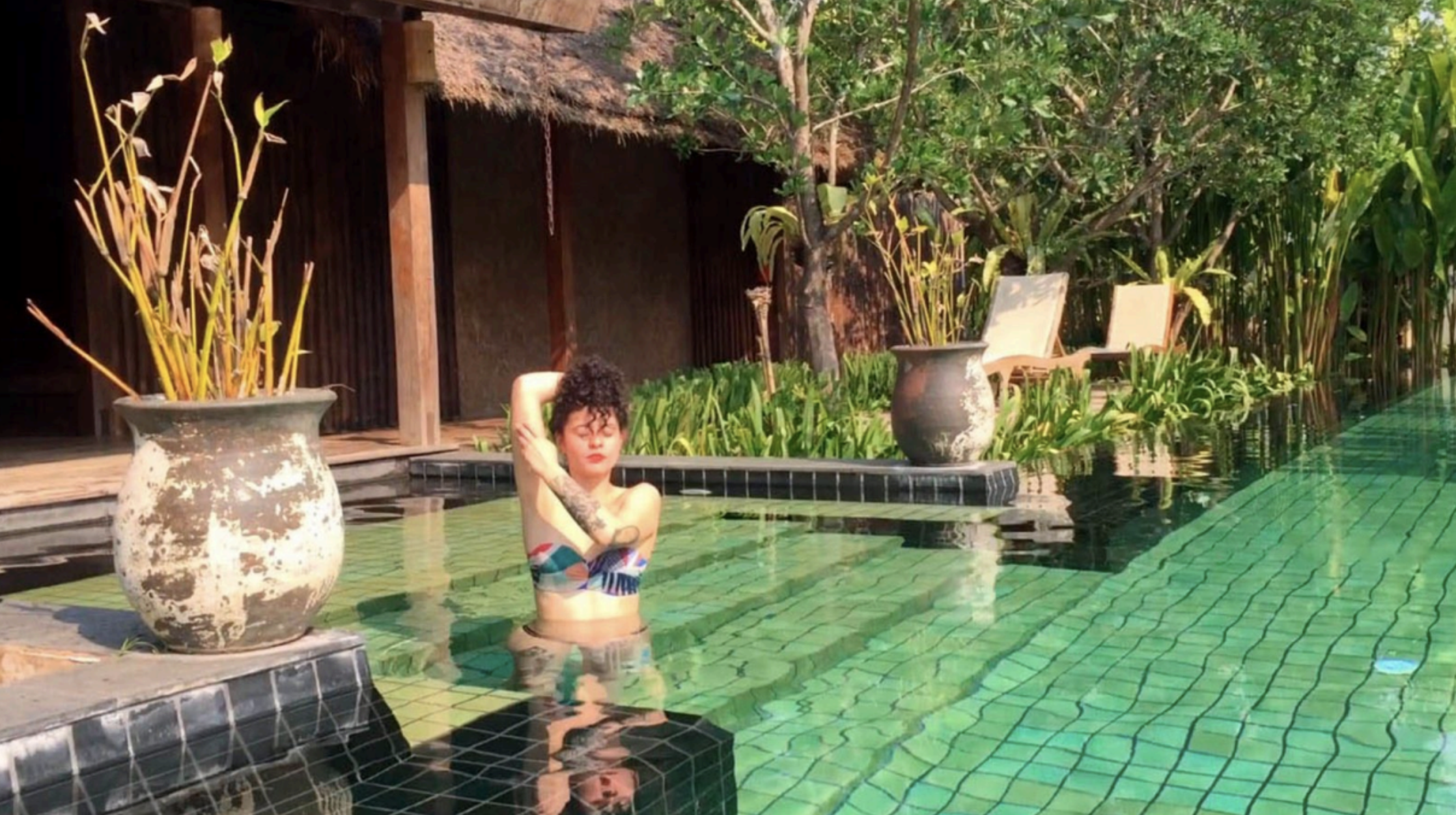
Te separas mucho. Paula Valeiro, 2024, Spain. D'A Festival 2025.
To close, for now, this first two-day phase at D'A, I watched Te separas mucho, by Paula Valeiro. An intimate proposal that recalls diary-cinema, it tells the story of the director’s emotional breakup with her ex-partner. It’s a film full of emotion, deeply personal, where the image becomes a space of confession and search.
Beyond its sincerity, what moved me most was the reflection on the idealization of the image, treated with extraordinary delicacy. However, the film takes certain directions that I found difficult to follow or fully understand, as if its internal logic responded more to an emotional process than a narrative one. Still, it is refreshing to encounter a film about breakups that is so honest, full of cinephilia, and presents a powerful idea: cinema, like images, can be as therapeutic as we believe, or even more.
Share this post: