NEXT DECADE
EDUCATION
Five Learning Trends for 2026 and the Decade Ahead
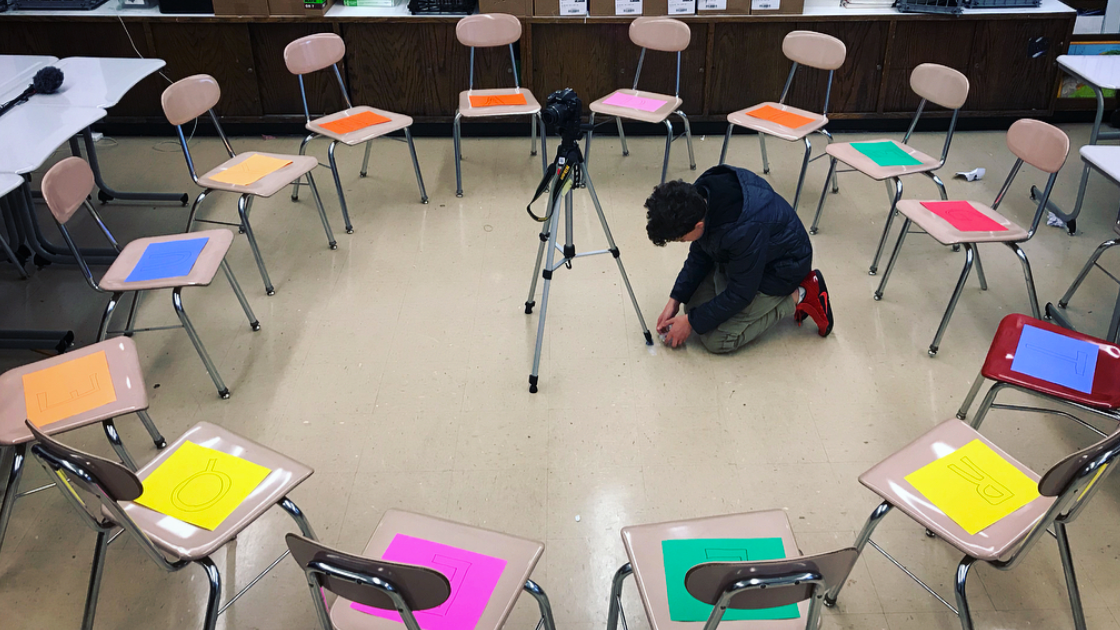
A middle school learning environment designed by TMN® founder and mentor Pablo Herrera. Harlem, NYC. 2018.
At TMN®, we work at the intersection of learning, media, and real world experience. From that position, certain patterns become impossible to ignore.
By Pablo Herrera, TMN® Founder
As 2025 came to an end, it felt less like the closing of a year and more like the closing of a cycle. Not because everything changed overnight, but because many assumptions that guided education for decades are no longer holding.
What follows are not predictions. They are observations grounded in practice. Warnings, yes, but warnings are meant to protect, not to alarm. The next decade will be challenging, but it will also be deeply exciting.
1. K–12 education will undergo radical transformation
K–12 education cannot continue operating as it does today.
In most Western countries, with very few exceptions, K–12 systems were designed around control rather than curiosity. Children and young people are placed into rigid structures that prioritize compliance over exploration. Instead of preparing them for the future, these systems often weaken creativity, confidence, and self esteem.
This will change in the coming decade, not because of ideological shifts, but because the current model is unsustainable.
Learning spaces will need to be redesigned. Fewer classrooms organized around rows of desks facing a single authority. More environments that allow movement, choice, collaboration, and ownership. Spaces built for learning rather than discipline.
Educational systems that insist on preserving outdated structures will struggle. Those that prioritize human development, agency, and real learning will adapt and survive.
Alternative education models will continue to grow. Families are increasingly understanding that early education plays a far more decisive role in a child’s future than expensive universities that offer credentials without clear pathways.
2. Traditional higher education will continue losing relevance
The spectacle is losing its power.
Expensive graduation ceremonies, symbolic rituals, and carefully produced narratives are beginning to feel disconnected from reality. Families and young people are starting to recognize the inconsistencies.
The university system, particularly in the United States, does not only educate. It produces narrative. Prestige. Belonging. Institutional continuity. A sense of mission accomplished.
Yet the social contract that once justified this model has broken.
For decades, the promise was clear. Pay a high price, earn a degree, secure a job, achieve stability.
Today the equation looks different. Higher costs, long term debt, uncertainty, and increasingly precarious work. When the return diminishes, the ritual loses meaning.
Student debt was once framed as an investment. Today it restricts life choices, delays independence, discourages creative risk, and generates persistent anxiety. Young people see this clearly through the experiences of siblings, relatives, and parents.
At the same time, the labor market has evolved while higher education has largely remained static. Employers seek real experience, adaptability, judgment, portfolios, and the ability to learn quickly. Universities continue to offer slow programs, outdated content, fictional evaluation systems, and simulations of professional life.
The disconnect is evident.
3. Artificial intelligence will reshape work and learning, making AI literacy essential
Artificial intelligence is already reshaping how we work and how we learn. The question is no longer whether to engage with it, but how.
AI is here to stay. At the same time, there is undeniable hype. Many AI driven ventures are built on inflated expectations rather than sustainable value. A correction is likely in the coming years, though it will not resemble past crises like 2008 or the dot com collapse. The technology itself is real. What will collapse are the illusions built around it.
Anxiety is currently driving many decisions. Anxiety tends to produce spectacle and oversimplification. It creates narratives that promise speed, ease, and solutions without consequences.
Education must respond differently.
Learners should be allowed to use AI to write, create, experiment, and explore. The problem is not the tool. The problem is the absence of literacy. What matters is teaching people how to think critically, how to evaluate outputs, and how to use technology responsibly.
Systems that respond with panic and prohibition will fall behind. Systems that prioritize AI literacy and thoughtful integration will prepare learners for reality.
4. The job market will prioritize portfolios over degrees
This shift presents a structural challenge for traditional education systems.
Schools and universities are built around simulation rather than participation. Too often, they protect students from responsibility instead of preparing them for it.
The next generations will need experience, not lectures.
At TMN®, learning is grounded in real world production. Young creators work on real projects, make mistakes in public, and receive feedback in real time. This accelerates learning in ways no classroom simulation can replicate.
Meanwhile, many institutions ban the very tools that define contemporary work. Phones are prohibited instead of contextualized. AI is restricted instead of taught. The assumption seems to be that avoiding reality will somehow prepare students for it.
The professional world does not operate this way. Portfolios, experience, judgment, and adaptability increasingly outweigh formal credentials.
5. The next decade will be challenging and deeply exciting
A few years ago, it was easy to feel anxious about the future. Automation, AI, and rapid technological change raised legitimate concerns about uncertainty and displacement.
Today, a different perspective is emerging.
We are learning to work alongside machines rather than against them. Tools are becoming extensions of human thinking and creativity. For those engaged in cultural production, storytelling, and the arts, this moment holds extraordinary potential.
Catastrophic narratives dominate much of the media landscape. They simplify complexity and amplify fear. A more constructive response is curiosity, education, and engagement.
Innovation should be explored, not banned. Change should be understood, not resisted. Learning should move forward, not backward.
The decade ahead will demand new forms of learning and new forms of responsibility. At TMN®, our work is to build these models carefully, in public, and grounded in real experience.
Challenging times have always shaped meaningful progress. This one will be no different.
Pablo Herrera, TMN® Founder
Ready to start shooting festivals like a pro?
TMN® Music Photography Course is open for enrollment now 🚀
More tools.
More opportunities.
More real learning.
Welcome to TMN® Learning.
Share this post: