TTSSFU
I really went for it
TTSSFU performing at British Music Embassy, SXSW 2026. Photo: Pablo Herrera / TMN.
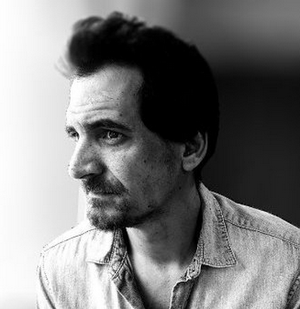
TTSSFU is the project of Tasmin Nicole Stephens. We spoke with her during SXSW 2026 about her experience performing in the United States, her connection to Manchester, and how her live set takes shape on stage.
AUSTIN | Interview by Pablo Herrera | Photo by Micah Bierman and Pablo Herrera
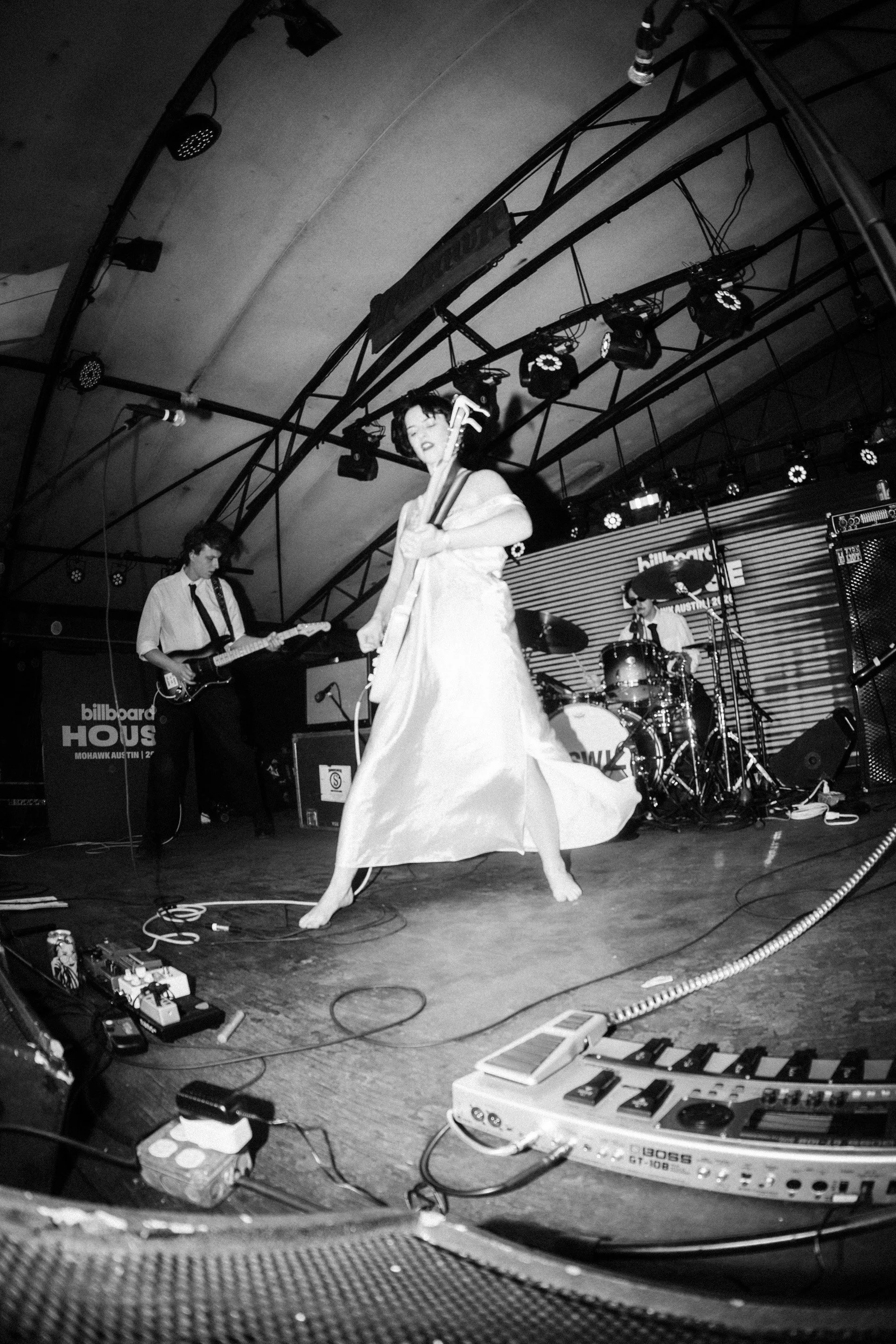
TTSSFU is the Manchester based project led by Tasmin Nicole Stephens, working alongside a rotating group of musicians. For this performance and interview, she was joined by Matt Deakin on drums, Michael Cottom on bass, and Harrison Bell on guitar.
Touring in the United States was, for Stephens, a new context at a moment where the project is growing steadily. Her work is backed by Partisan Records, the NYC based label also working with artists such as Geese, IDLES, and Laura Marling.
During our visit to Austin, I had the chance to see them perform twice. The first show at the British Music Embassy took place at night. The second, at the Billboard House at Mohawk, happened during the day. Both sets were strong for someone like me, who did not know the project in depth. What stood out immediately was how both shows closed with “I Hope You Die,” a track released in 2023 and later included as the opening song on Me, Jed and Andy (2024).
I was interested in understanding why that song closes the set, and why it feels so different from its recorded version.
For Stephens, the experience of playing in the United States has been shaped by the openness of the environment and the way audiences engage with the music.
“I’ve never been to a place where everyone’s so kind and happy… it doesn’t seem to matter what time of day it is.”
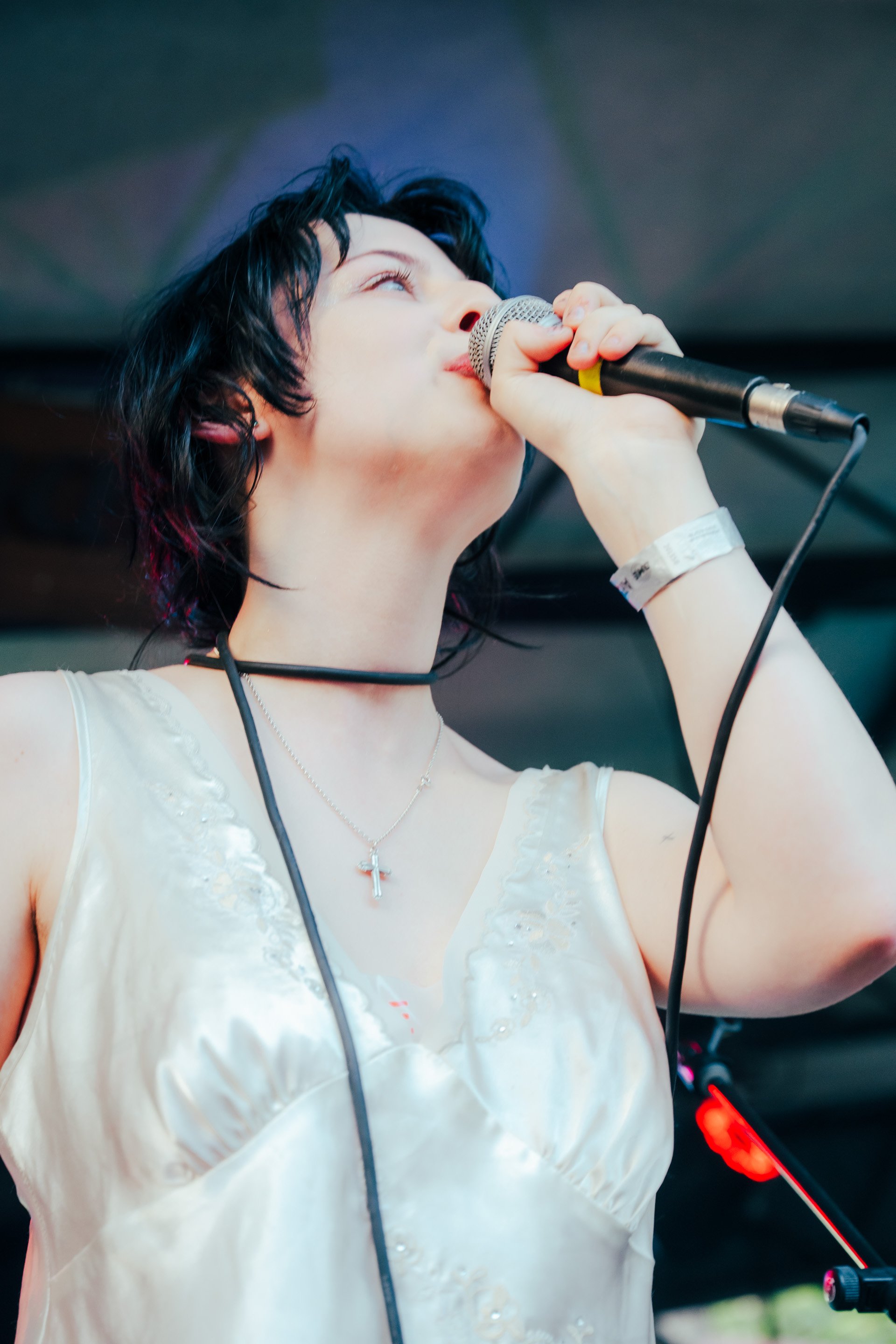
TSSFU performing at Billboard House, SXSW 2026. Photo by Micah Bierman / TMN
Her impressions describe a sense of ease when interacting with people, and a different energy around shows. Performances feel active, with audiences paying attention while still responding physically.
Manchester remains central to the project. It is where the musicians connected and where a local scene shaped the way they work. Artists move between projects, know each other, and build something collectively without much structure. “There’s a big scene of musicians where everyone just sort of knows each other… everyone’s pals,” Stephens ephasizes.
That environment feeds directly into the tone of the music. I asked how the city, including its weather, influences her perspective. Bassist Michael Cottom added, half joking, that he certainly brings the rain into his bass playing. The connection between environment and sound is not accidental.
“I think if I lived here, my songs might be about how much I love life… but in Manchester, you’re out all night and it’s raining.”
Going back to “I Hope You Die,” the track has taken a different form on stage. What was originally recorded in one way has been pushed into something more direct and physical when performed live.
Stephens explained that the shift came from working with previous band members and trying a different approach during rehearsals. “My old band members, Ruben and Paddy, were doing a practice and they were like, ‘we’ve decid to do “I Hope You Die” like this, do you like it?’ And it just kind of stuck like that. So it’s lke a really good time to get out all of the frustrations and feel like a rock star.”
That version became part of the live set. The song now carries a different weight, building tension and releasing it at the end of the performance. On stage, it becomes a release point.
“I feel like the set’s curated to give a little taste of everything… we kind of recreated that song to be like a punk song live.”
Matt Deakin (drums), Harrison Bell (guitar), Tasmin Nicole Stephens (vocals), Michael Cottom (bass). Photo: Pablo Herrera / TMN.
That release is also tied to a shift in how Stephens approaches performance. She spoke about moving into a more physical and expressive presence on stage, influenced by powerful frontwomen. “There’s this band called PISS… it’s the closest we can get to feeling a little bit like how they might feel when they do a set. She’s an incredible frontwoman… That change became real once she allowed herself to go there.
“I’ve always been quite envious of women who scream on stage, and I didn’t think I could do that. When I got given the opportunity, I really went for it.”
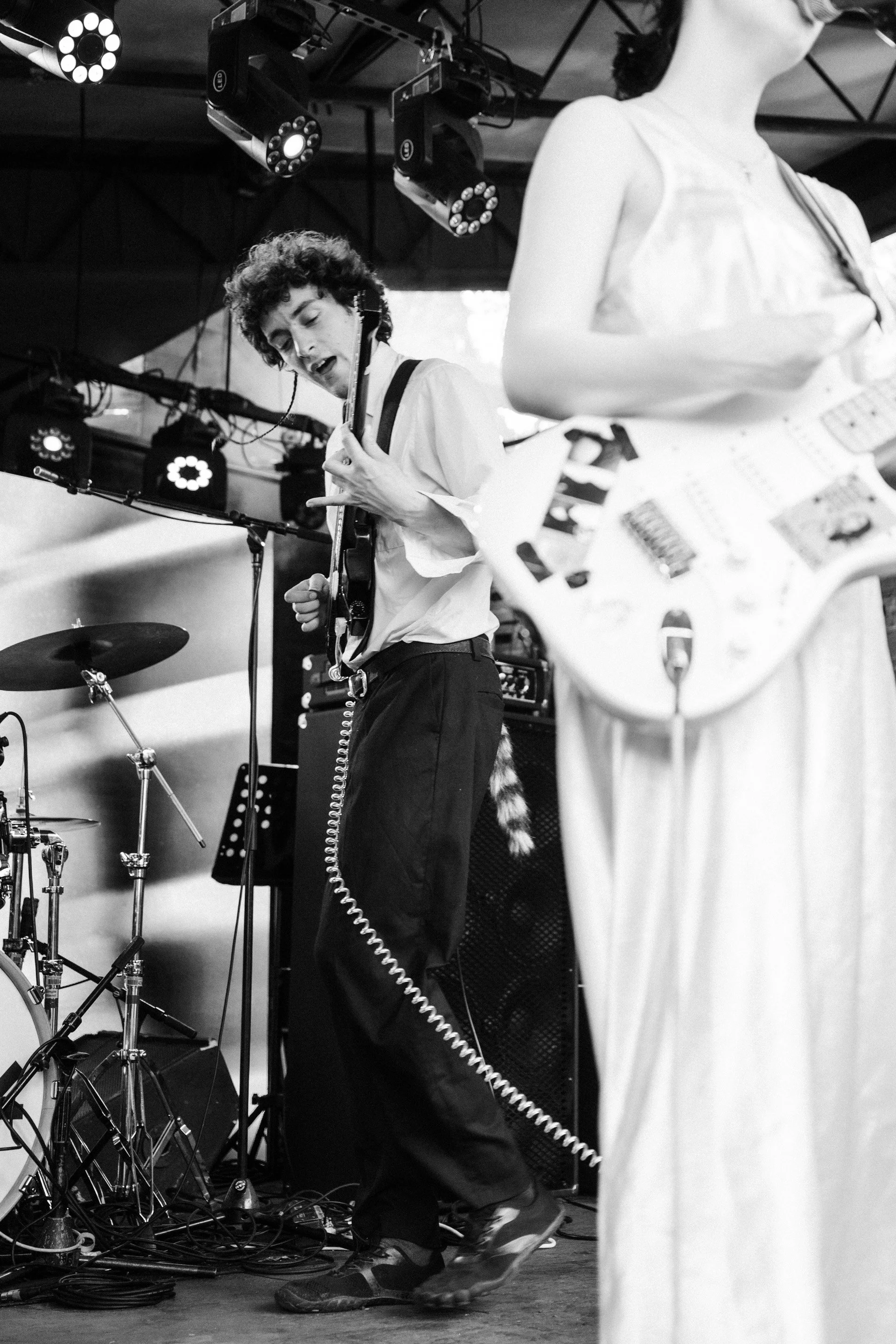
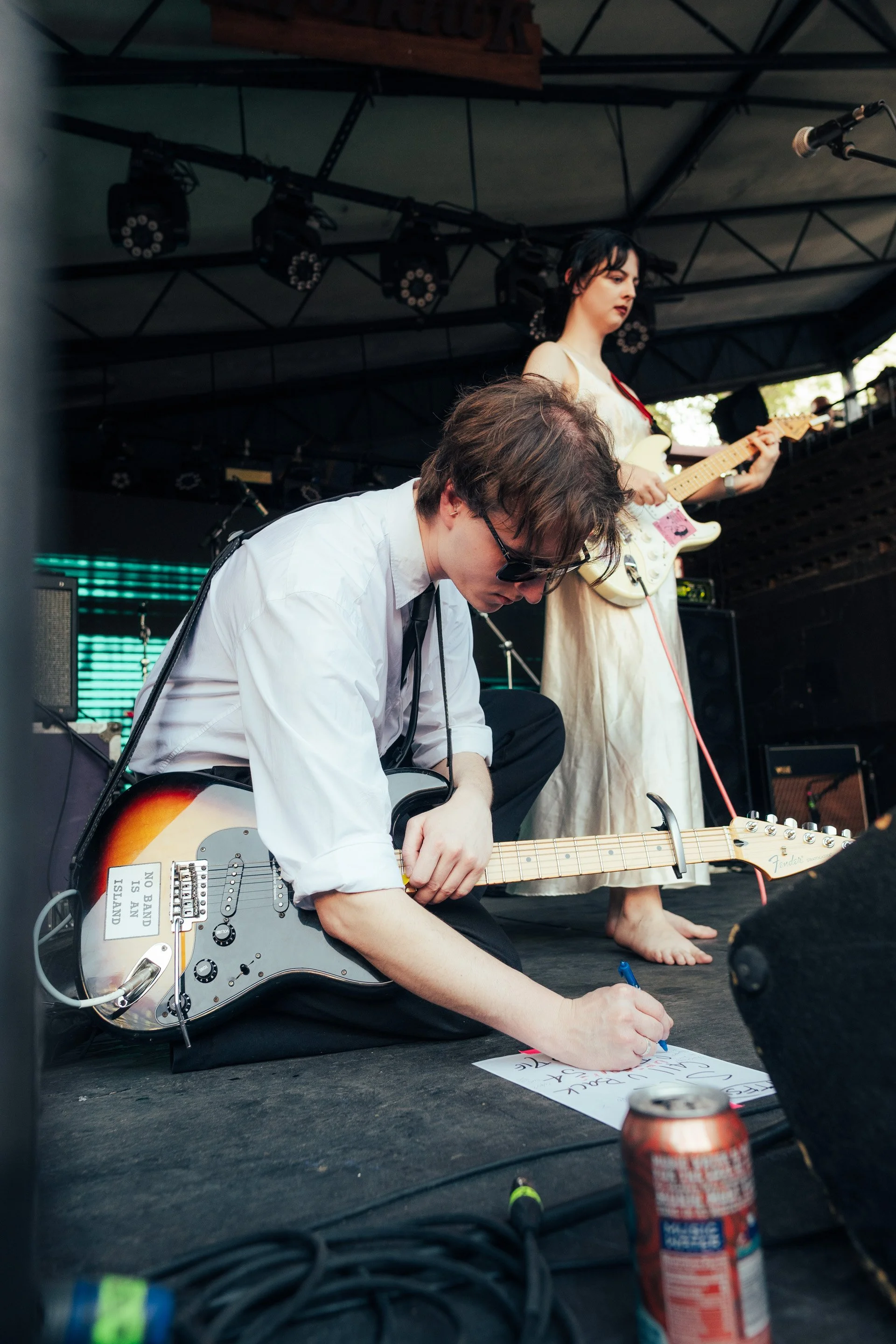
The set builds toward that moment. It becomes something to anticipate, not only for the audience, but for the band as well. “It’s a nice energy release… something you can always look forward to. You wake up, you’ve had a bad day, and you know you’ve got that,” says guitarist Michael Cottom.
The video closes with that release. In both shows, the same feeling remained at the end.
Our interview with TTSSFU is now live, and you can watch it below.