HOW DO WE RETHINK EDUCATION?

Andrew Frishman, co-CEO of Big Picture Learning. Photo: Pablo Herrera / TMN.
Andrew Frishman, co-CEO of Big Picture Learning, discusses the limitations of traditional education, the value of learning beyond the classroom and the role of human creativity in the age of artificial intelligence.
DALLAS | TMN Editorial | Interview by Hasi Kapali and Emil Cinto, BPL Fellows
What makes an educational experience meaningful? For Andrew Frishman, co-CEO of Big Picture Learning, the answer has less to do with conventional academic achievements and more with the opportunities young people have to discover their interests, build relationships and engage with the world beyond school.
Speaking with TMN creators Hasi Kapali and Emil Cinto during the Big Picture Learning Big Bang Conference 2026 in Dallas, Texas, Frishman questions an educational model that often prioritizes delivering information over understanding what young people actually want to learn.
His perspective comes partly from personal experience. Although he attended conventional schools, Frishman recalls that some of his most significant learning experiences happened elsewhere. An internship at an aquarium, opportunities to work in his community and relationships with mentors helped shape his interests and eventually influenced his career in education.
Decades later, those experiences remain more memorable to him than much of what he learned in a traditional classroom.
BEYOND THE CLASSROOM
For Frishman, rethinking education requires more than introducing new teaching methods. It means reconsidering the relationship between young people, educators and the communities around them. Instead of positioning young people as passive recipients of information, he advocates for educational environments that recognize their individual interests and give them opportunities to participate in decisions about their learning.
That also means creating stronger relationships with adults outside their immediate families. Mentors, professionals and community members can introduce perspectives and experiences that conventional academic settings may struggle to provide.
Frishman argues that these encounters can fundamentally change how young people understand themselves and their ability to influence society. Instead of simply adapting to established systems, they can begin to see themselves as participants capable of changing them.
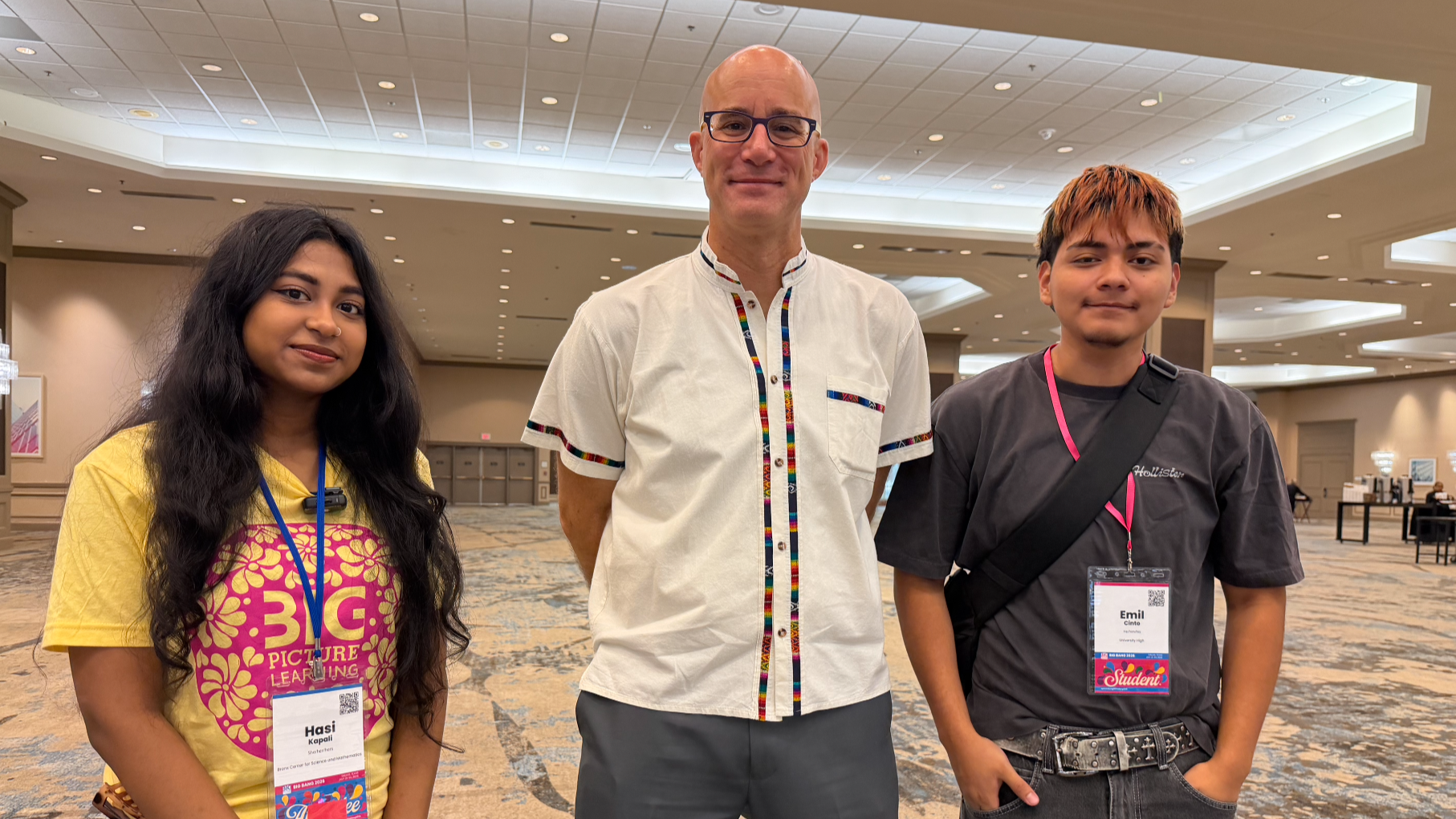
Andrew Frishman with TMN - Big Picture Learning Fellows - Hasi Kapali and Emil Cinto. Photo: Pablo Herrera / TMN.
CREATIVITY IN THE AGE OF AI
The conversation also examines the growing influence of artificial intelligence and what it means for education. Frishman does not view AI primarily as a competition between humans and machines. He recognizes its potential to help people accomplish complex tasks, but identifies collaboration and creativity as particularly valuable human capabilities.
He describes creativity as something shaped by individual experiences, relationships and the ability to respond to unfamiliar situations. While AI can reproduce patterns and generate polished results, he suggests that human creativity often comes from questioning established ideas and introducing unexpected perspectives.
This distinction raises an important question for education: if technology can increasingly perform predictable intellectual tasks, should schools continue to prioritize standardized responses, or place greater value on experimentation, collaboration and independent thinking?
THINKING BEYOND ACADEMIC RESULTS
Toward the end of the interview, Frishman challenges another familiar assumption: that educational success can be adequately measured through grades, test scores and graduation rates. He argues for a longer perspective, one that considers what happens five, ten or twenty years after someone completes their education.
The relationships people develop, the experiences they pursue and the opportunities they discover may have consequences that are impossible to measure at the time. For Frishman, education should ultimately expand the possibilities available to young people, allowing them to discover not only what they want to do, but also the role they want to play in the world.
Watch the full conversation with Andrew Frishman, interviewed by TMN creators and Big Picture Learning Fellows Hasi Kapali and Emil Cinto at the Big Picture Learning Big Bang Conference 2026.
KEEP UP WITH TMN
More interviews, coverage, and conversations about music and culture.